
The Collection
Uncut polki, kundan & jadau — bridal sets, chokers & harams, the heritage craft of Punjab. C.L Khanna Jewellers, Lawrence Road.
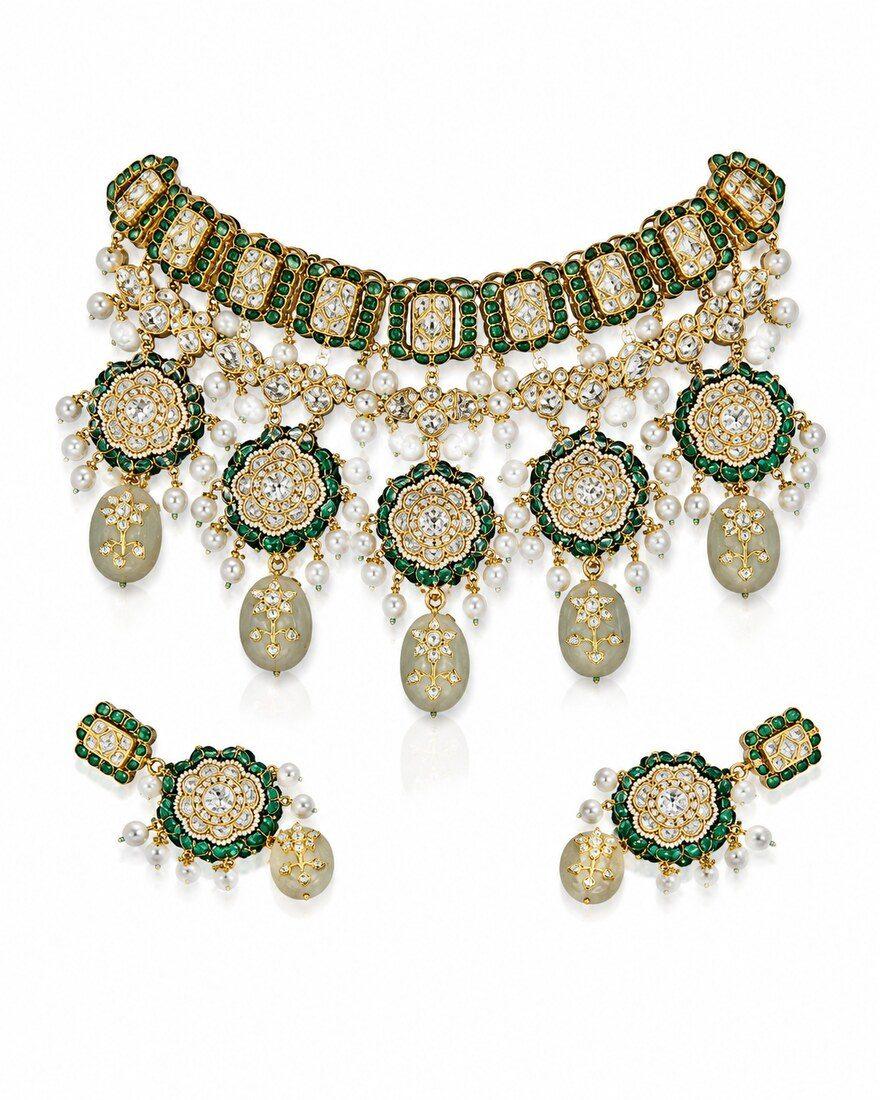
Uncut polki diamonds set the tone for this choker, finished with a run of carved emerald drops along the bottom edge. Polki is set using the jadau technique — stones pressed into a soft gold foil bed rather than claw-set — which is why the diamonds here have that slightly irregular, antique glint rather than the precise sparkle of faceted stones. Jadau setting is entirely hand-done and can't really be replicated by machine, which is part of what keeps polki pieces in demand for bridal wear specifically. The emerald drops add a controlled hit of colour against the mostly-white polki above them.
Price on request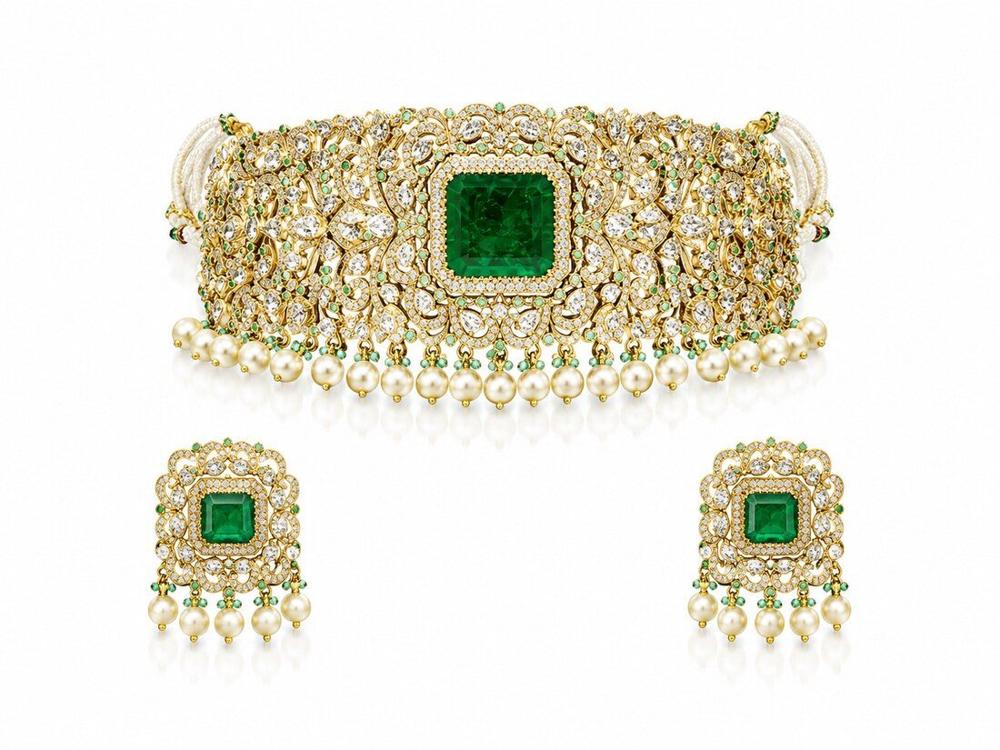
This bracelet combines jadau-set polki with rows of small emerald beads, finished with a matching pair of earrings. As with all jadau work, the polki stones are pressed into gold foil rather than prong-set, giving the bracelet a warmer, less clinical sparkle than a faceted-diamond piece would have. The emerald beads run alongside the polki rather than being scattered through it, keeping the two elements visually distinct. Sized to sit comfortably at the wrist without restricting movement, making it a practical option for festive occasions that involve a full day of wear.
Price on request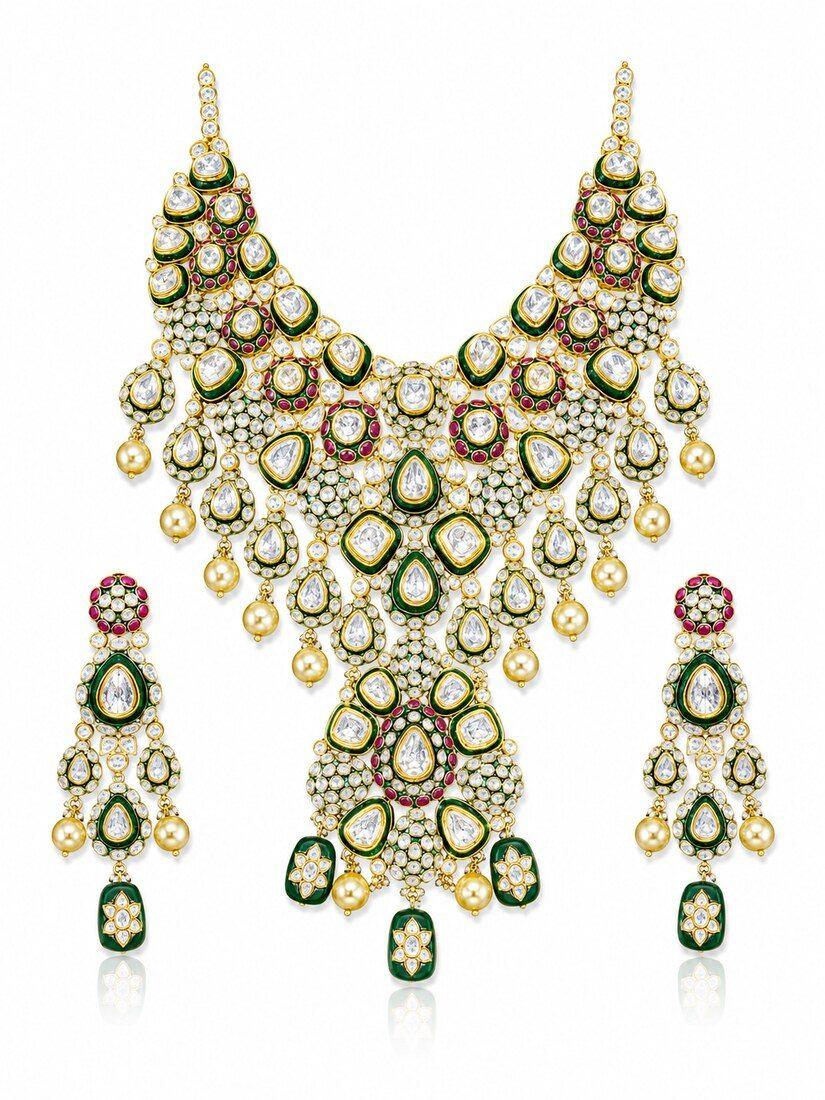
A grand bib of kundan work forms the base of this necklace, with emeralds set through the design for colour. Kundan is closely related to polki but uses a slightly different foil-setting process, generally associated with an even more traditional, layered bridal look. The scale here is deliberately large — this is built as a centrepiece necklace for the wedding day itself rather than a smaller occasion. Kundan craftsmanship of this kind is increasingly rare to find done properly, since it depends on setters trained specifically in the technique rather than standard prong or bezel work.
Price on request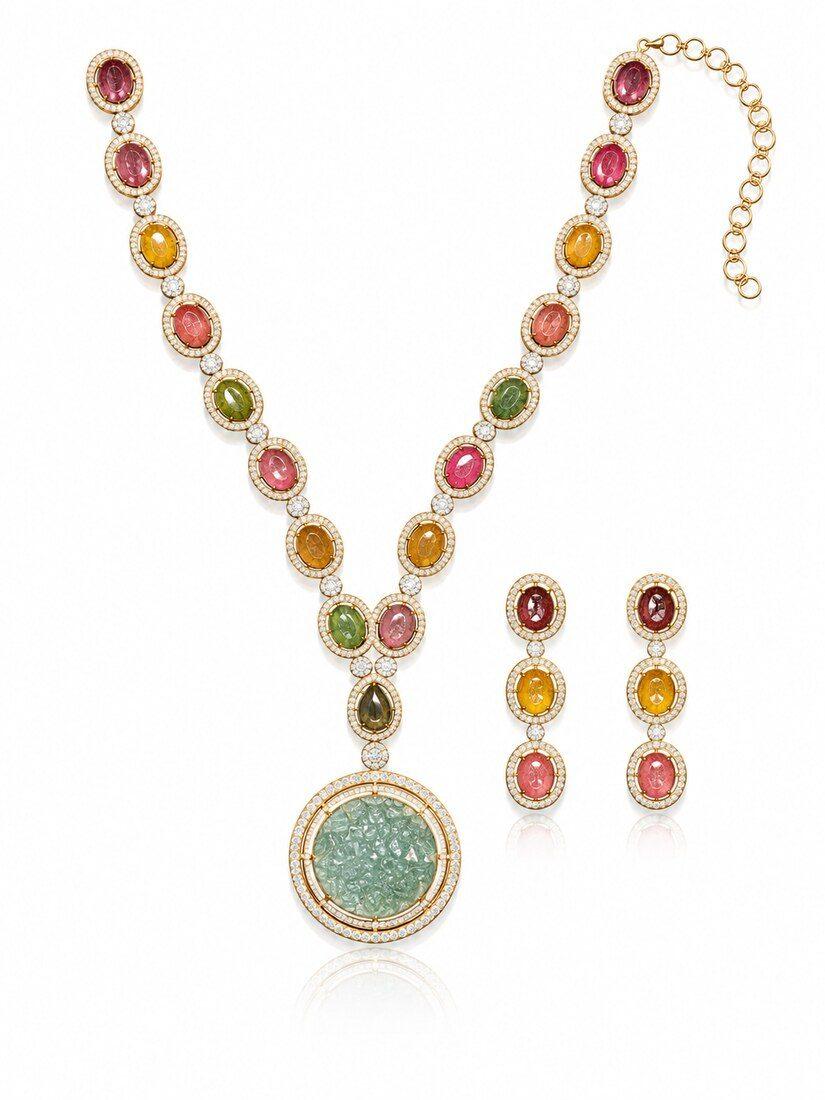
Soft pink and green stones alternate along this mala, hand-strung and finished with a round, carved jade pendant at the centre. A mala sits longer than a standard necklace, often falling below the collarbone, and this one is built with a lighter, more casual palette than the site's typical bridal red-and-gold combinations. The jade pendant is carved rather than left as a plain cabochon, adding detail to what would otherwise be the piece's simplest element. Versatile enough to move between festive functions and regular daily wear, depending on how it's styled.
Price on request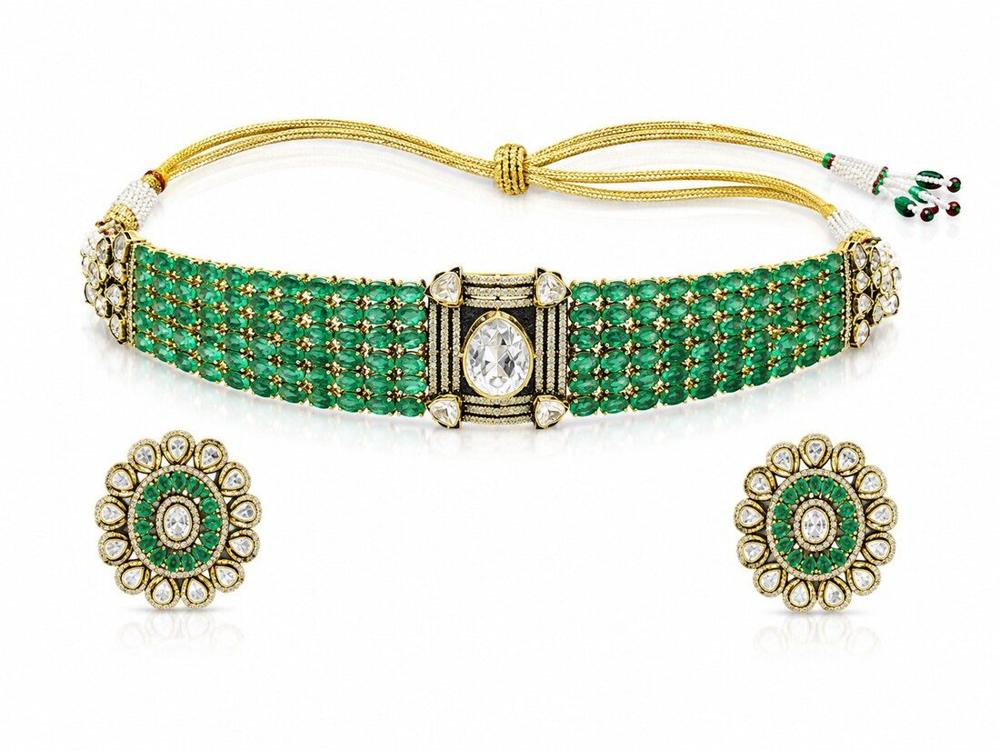
Emerald beads run alongside jadau-set polki in this choker, with a matching bracelet and stud earrings rounding out the full set. Having a coordinated bracelet and earrings alongside the choker means the whole look can be assembled from one set rather than mixing pieces from different collections, which matters for wedding dressing specifically. The emerald beads are strung individually rather than set as flat stones, giving them a slightly different texture from the polki around them. Built for weddings and festive occasions where a complete, matched look is the goal.
Price on request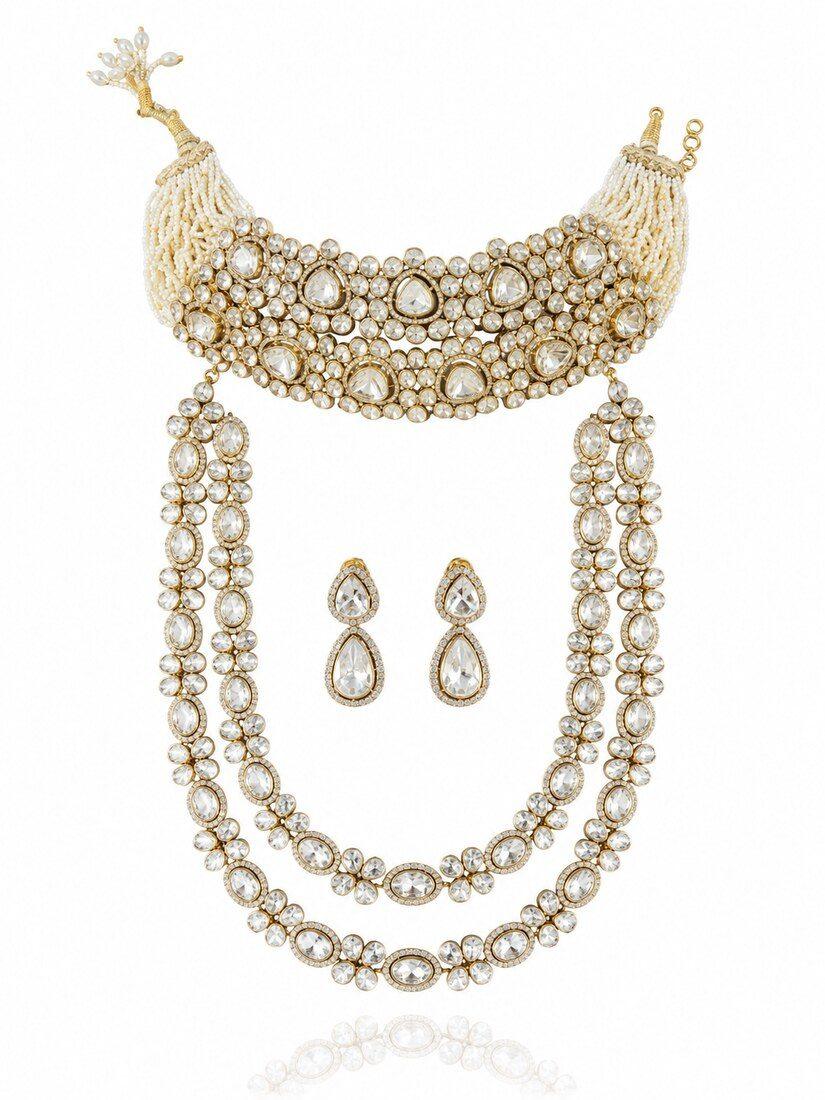
Two full layers of uncut polki make up this choker, hand-set so each tier sits at a slightly different height around the neck. The double-layer construction gives it noticeably more visual weight than a single-tier choker, which is exactly the point for a piece meant to anchor a full bridal look. Because every stone is hand-set into the jadau foil bed, no two polki pieces will be positioned in quite the same way, giving each choker slight individual character despite the repeated design. Built specifically with bridal wear in mind, where scale and presence matter more than restraint.
Price on request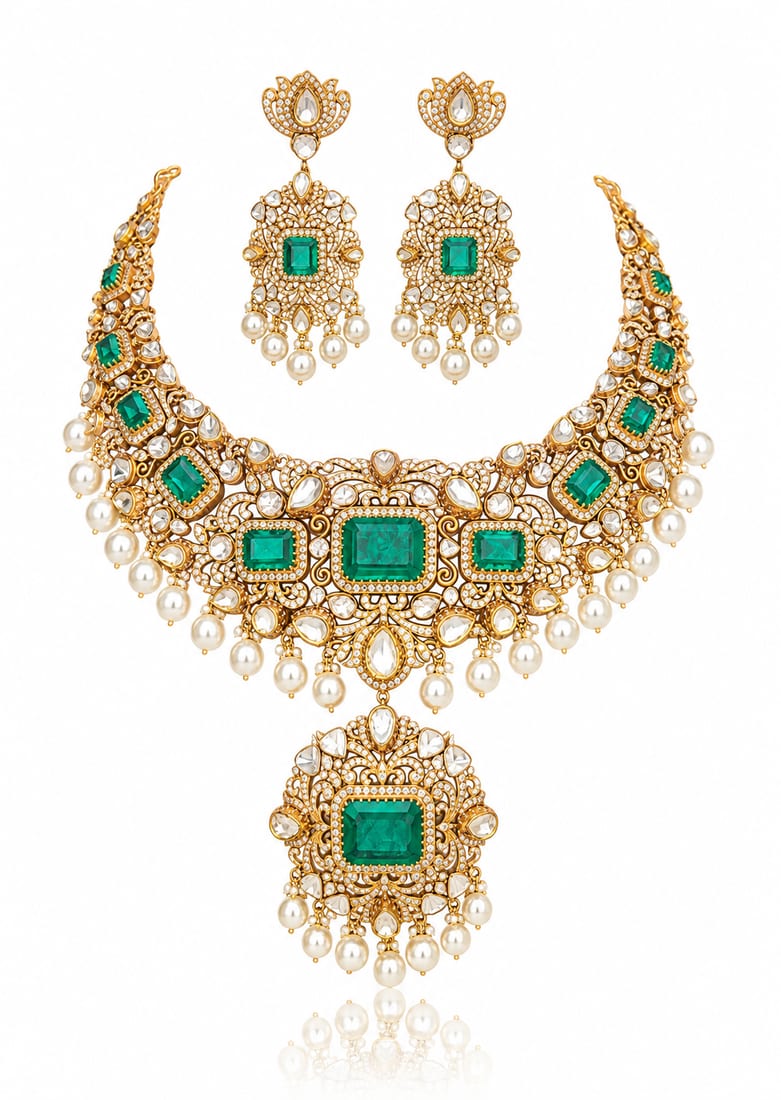
Emerald-cut green stones bloom across this polki bridal set, finished with pearl drops that soften the otherwise structured stone pattern. The emerald accents are cut with flat, rectangular facets rather than left as rounded cabochons, giving them a more contemporary edge against the traditional uncut polki surrounding them. Pearl drops are added at the fringe to introduce movement, since the polki itself sits fairly still against the neck. A full bridal set, built to be worn as the centrepiece of a wedding-day look rather than for smaller occasions.
Price on request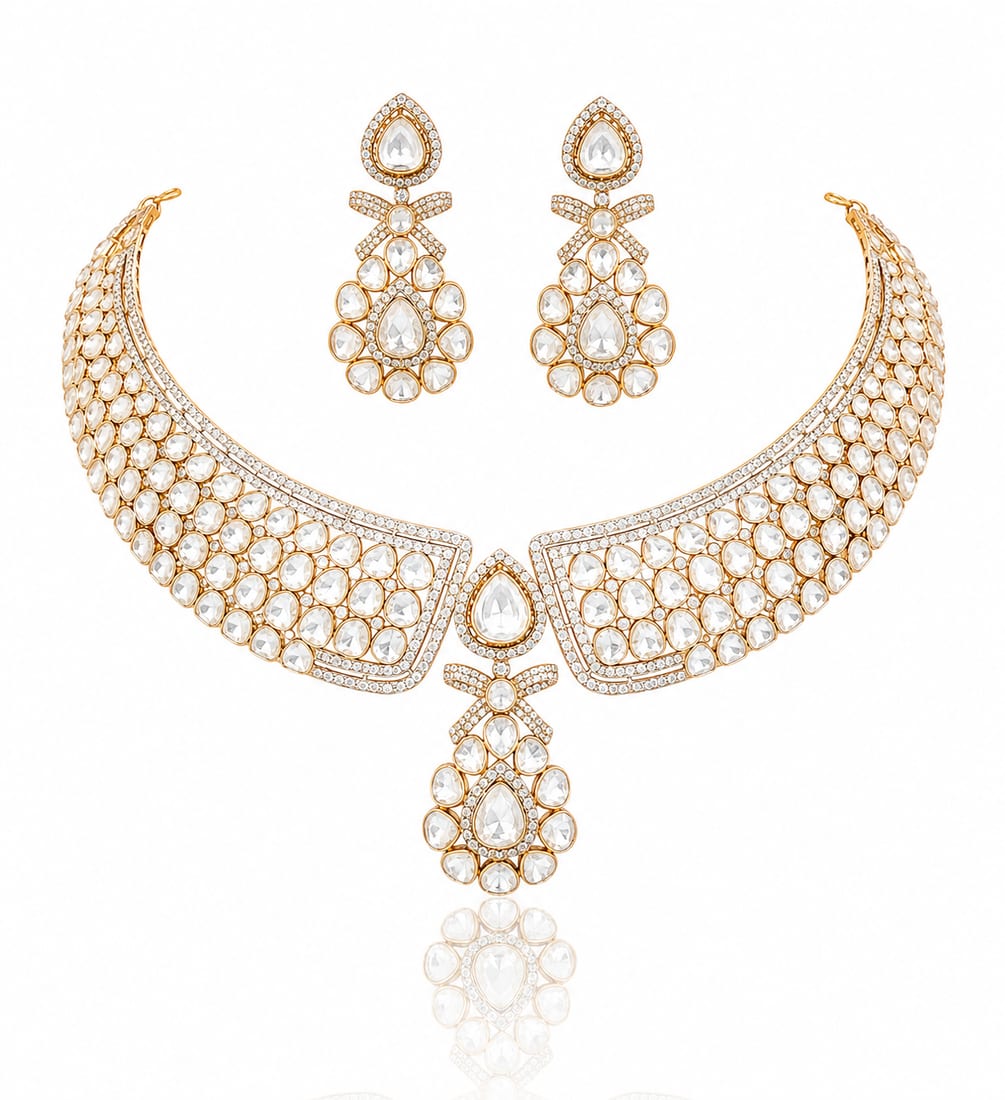
This bridal set keeps entirely to white uncut polki, finished with delicate bow motifs worked into the design at intervals. Skipping coloured stones entirely is a specific styling choice — it keeps the set from competing with a heavily embroidered bridal outfit, letting the polki's natural glint do the work instead. The bow details are a softer, more decorative touch than the geometric patterns typical of most polki work. Hand-set throughout, it's built for bridal wear where an all-white, textured look is preferred over the more common red-and-gold bridal palette.
Price on request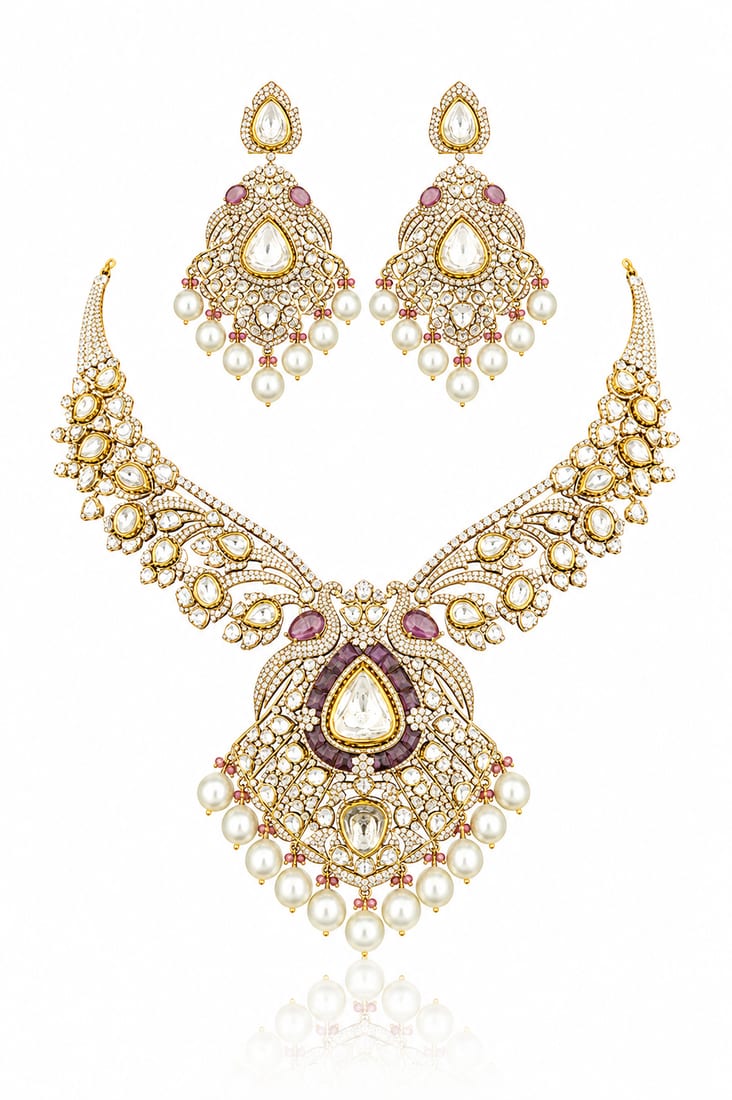
Ruby cabochons and pearls surround a pair of peacock motifs in this bridal set, the peacocks meeting at the centre of the choker in a mirrored design. Peacock imagery has long been part of Indian bridal jewellery, generally read as a symbol of grace and beauty, and it's rendered here in dense polki work rather than as a simple engraved outline. The ruby cabochons are smooth and domed rather than faceted, keeping their colour consistent even in low light. A full bridal set built around a motif with real cultural weight behind it.
Price on request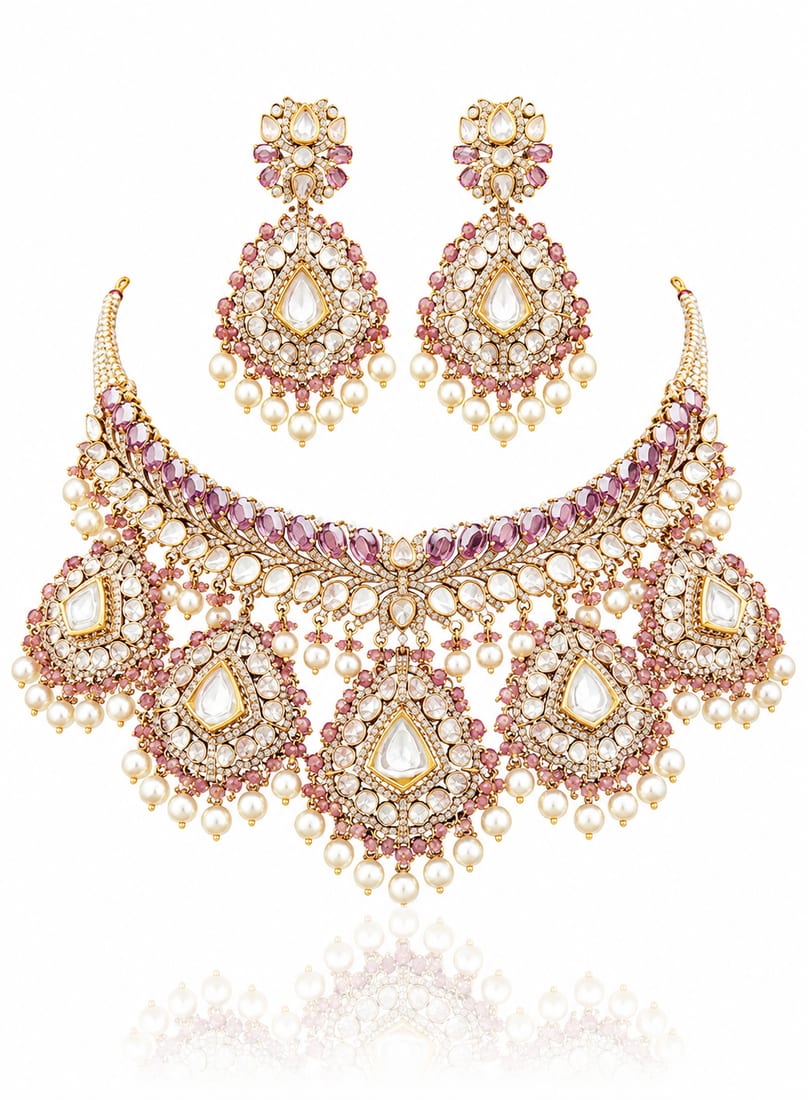
Soft pink stones run through this polki set, finished with a fringe of pearl drops along the bottom edge. Pink is a less common choice than the ruby-red typically seen in bridal polki work, giving this set a gentler, more contemporary bridal palette without abandoning the traditional jadau technique. The pearl fringe adds movement to a piece that would otherwise sit fairly flat against the neckline. Suited to both bridal wear and festive occasions where a softer colour story is wanted instead of the usual red and green.
Price on request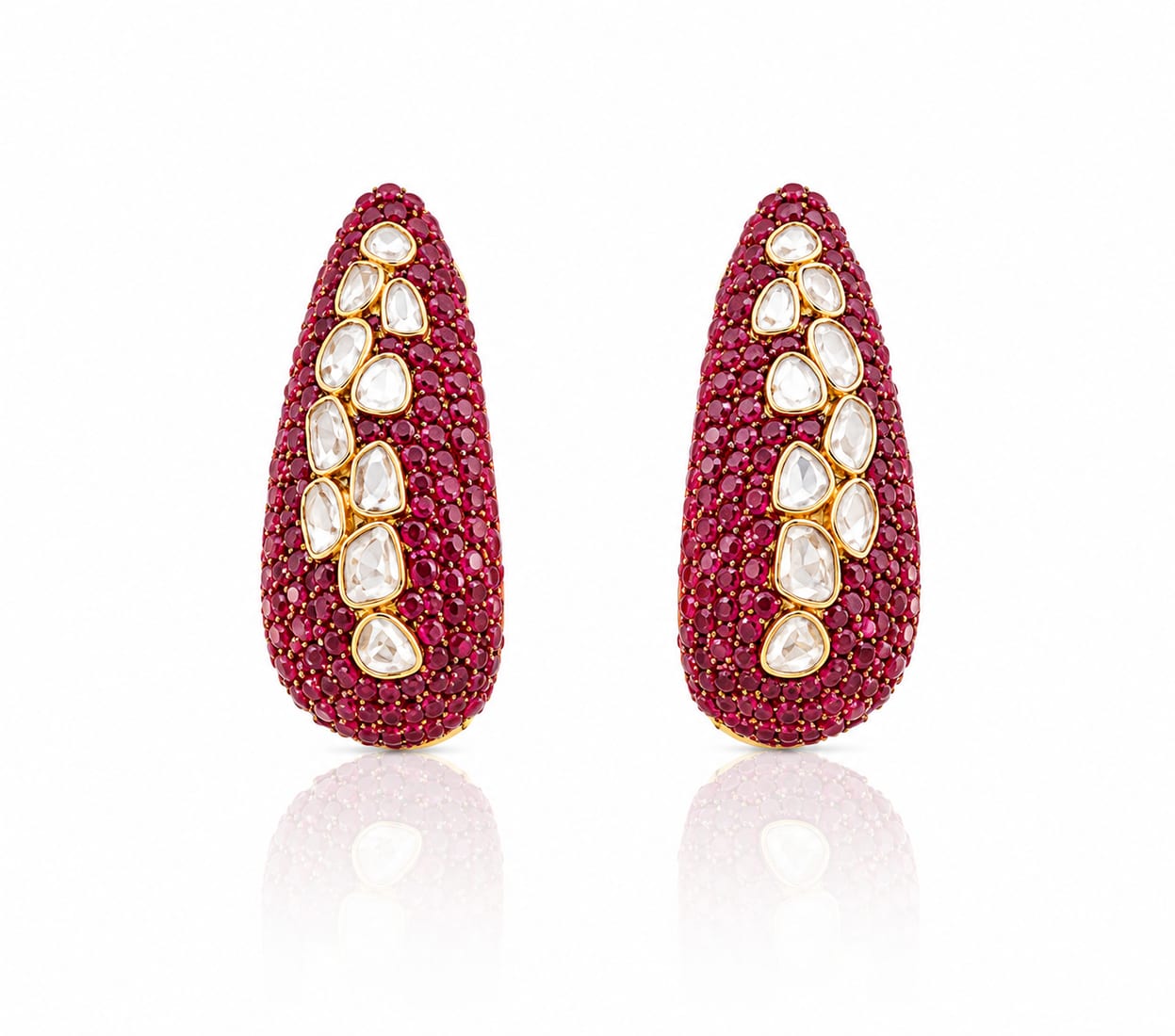
Ruby teardrops are pavé-set in these earrings, trimmed along the edge with uncut polki diamonds. The teardrop shape tapers to a point, giving the earrings a lighter, more wearable drop than a fuller polki design would allow. Pavé-setting the rubies packs them close enough that the red reads as a solid field of colour rather than individual stones. The uncut diamond trim keeps a thread of polki's characteristic glint running along the earring's outer edge. A festive and party-wear pick for when you want colour without the full scale of a bridal-weight piece.
Price on request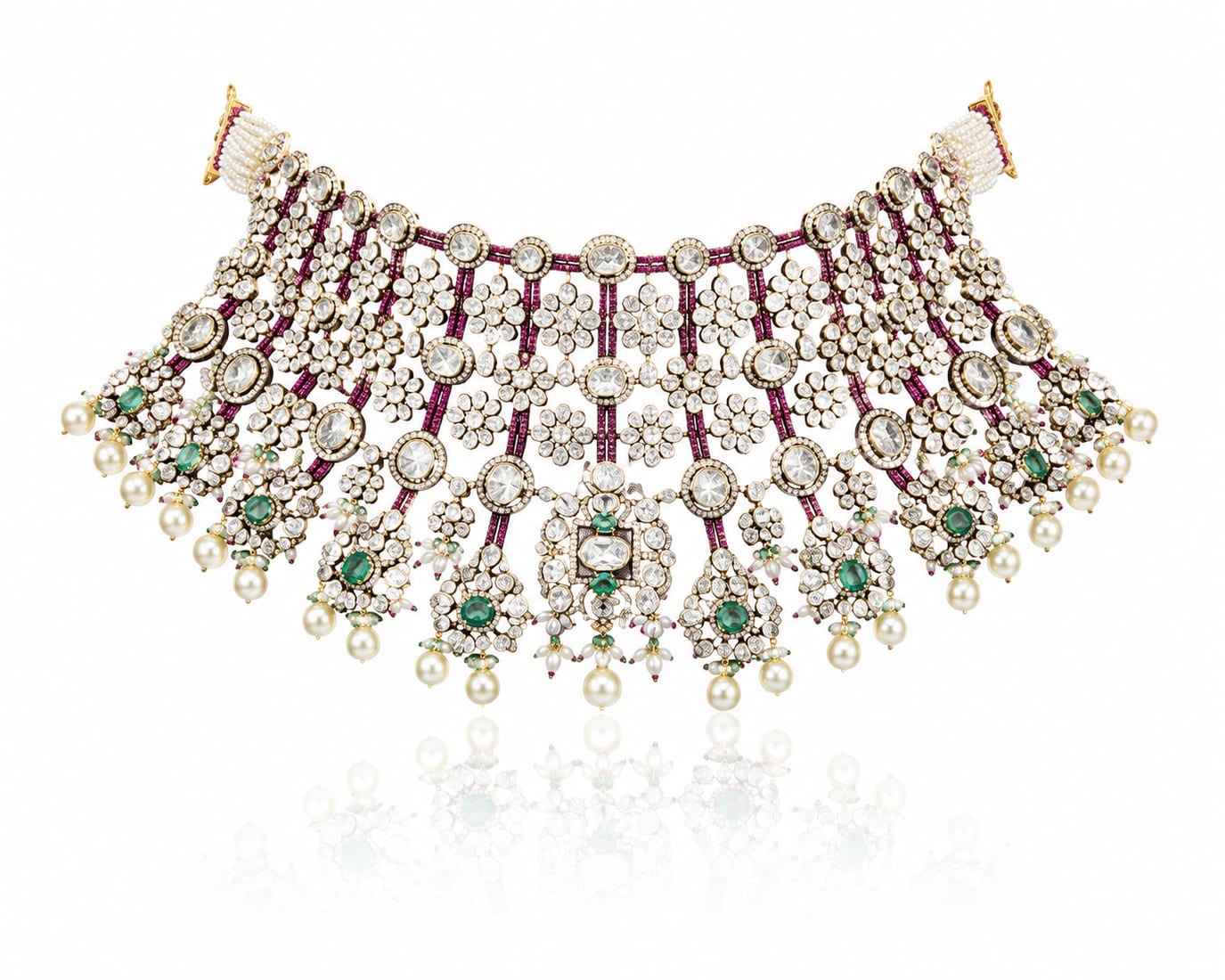
This choker is finished in an oxidized antique tone rather than bright gold, set with rubies and edged with a fringe of pearls along the base. Oxidizing darkens the recessed areas of the metalwork deliberately, a finish that's chosen specifically to make hand-set rubies stand out more sharply against the surrounding gold. The pearl fringe hangs loose enough to move with the wearer rather than sitting rigid. Built for bridal and festive wear where the darker, more antique finish is preferred over the brighter high-polish look of contemporary gold jewellery.
Price on request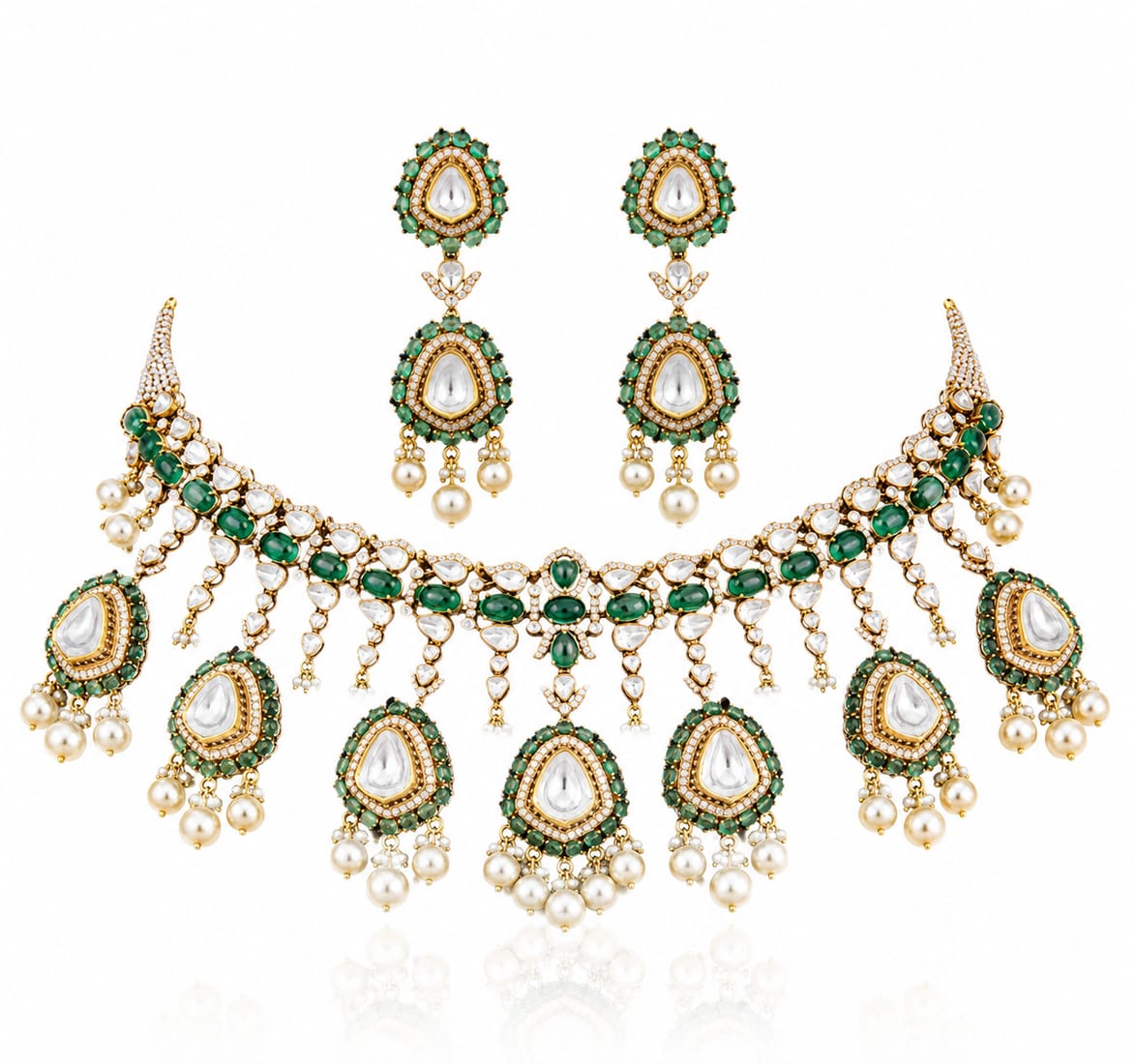
White polki forms the body of this choker, with emerald drops and a pearl fringe hanging below. The emerald drops are placed with intentional spacing rather than uniform repetition, giving the fringe a slightly organic, asymmetrical rhythm as it falls. Jadau-set polki gives the main body of the choker its characteristic soft glint, distinct from the sharper sparkle of faceted diamonds. Suited to both bridal wear and reception functions, where the choker needs to photograph well without being quite as heavy as a full multi-layer bridal piece.
Price on request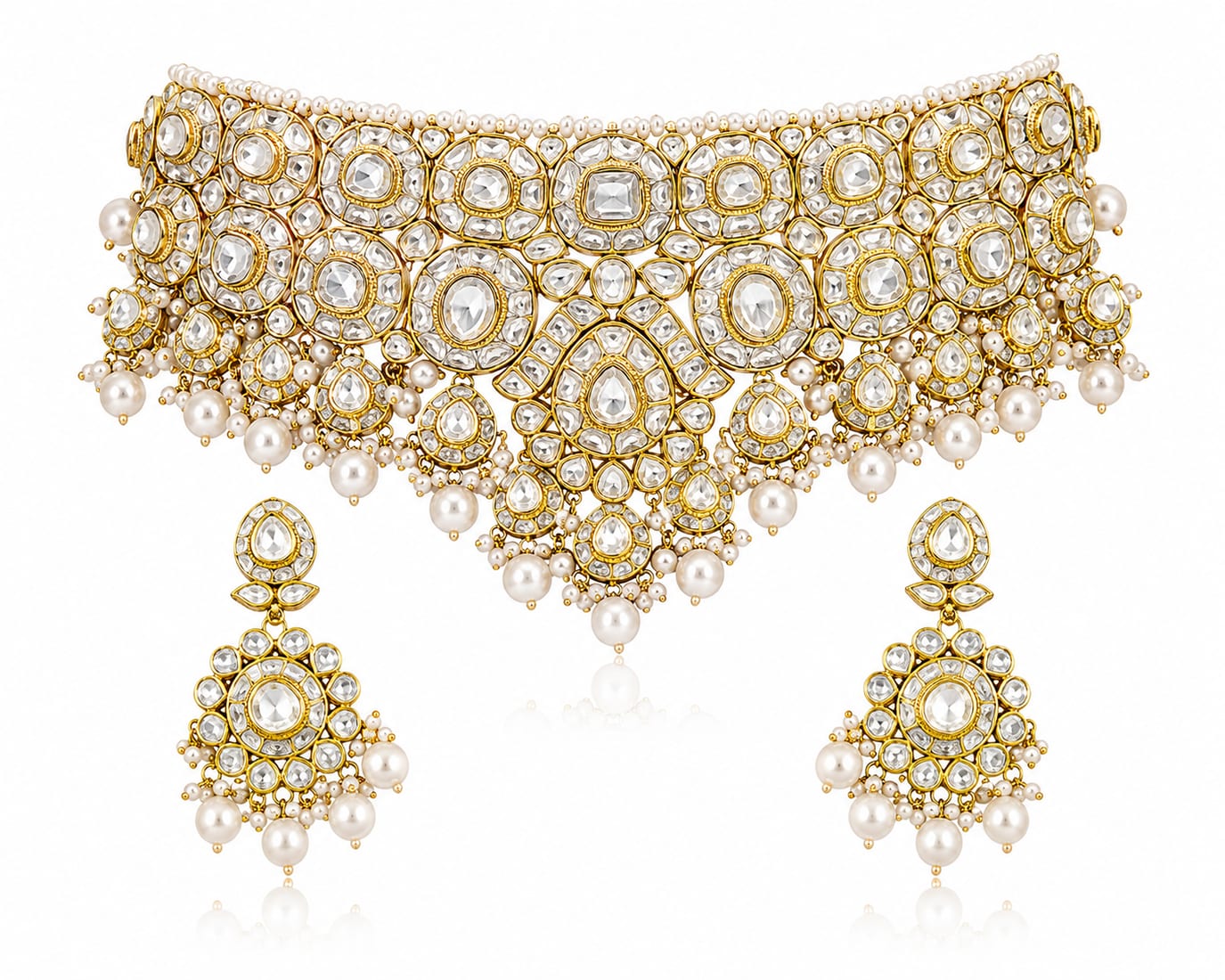
A grand uncut-polki choker, this piece carries emerald and pearl drops across its full width rather than concentrated at the centre. The scale here is closer to a traditional bridal statement piece than a lighter festive choker, with the polki set densely enough that very little base metal shows through. Emerald and pearl drops are mixed along the fringe rather than alternated in a strict pattern, giving the bottom edge some visual irregularity. Built specifically for bridal wear, where its size and hand-set detailing are meant to anchor the entire look.
Price on request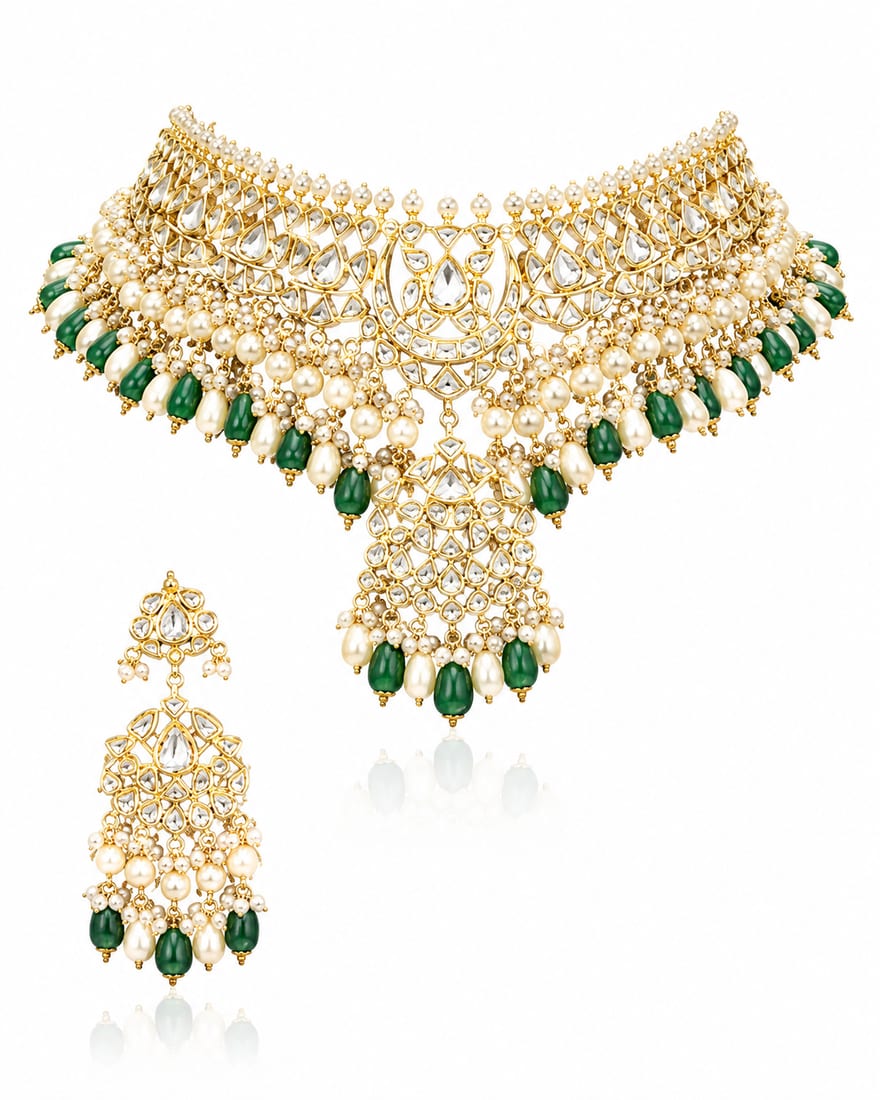
Emerald cabochons are set throughout this polki choker, with matching earrings completing the set. The cabochons are left smooth and domed rather than faceted, which lets them hold colour evenly rather than breaking it into individual glints the way a cut stone would. Jadau setting throughout means both the choker and earrings share the same soft, foil-set glint rather than mixing setting styles within one look. A wedding and festive set built to be worn together, since the earrings are designed specifically to echo the choker's stone placement.
Price on request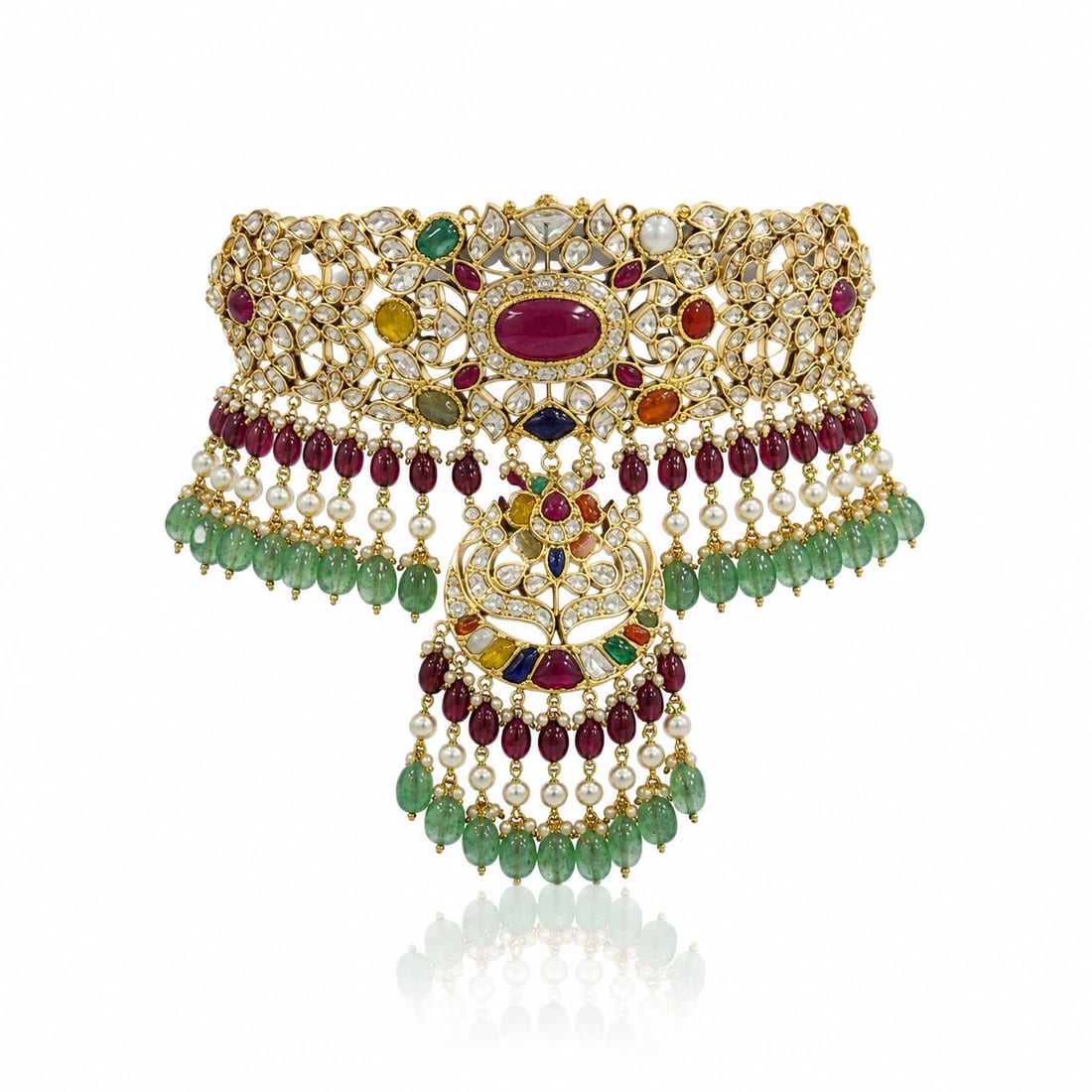
Nine different gemstones — the traditional navratna set — surround an ornate peacock centrepiece on this choker. Navratna jewellery uses nine specific stones together, each traditionally associated with a different planet in Vedic astrology, making this more than just a multicolour design choice. Setting nine different stone types in one piece requires more precise sizing and placement than a single-stone design, since each gem has different hardness and cut characteristics. The peacock centrepiece anchors the whole arrangement. A bridal and festive piece with genuine traditional and symbolic weight.
Price on request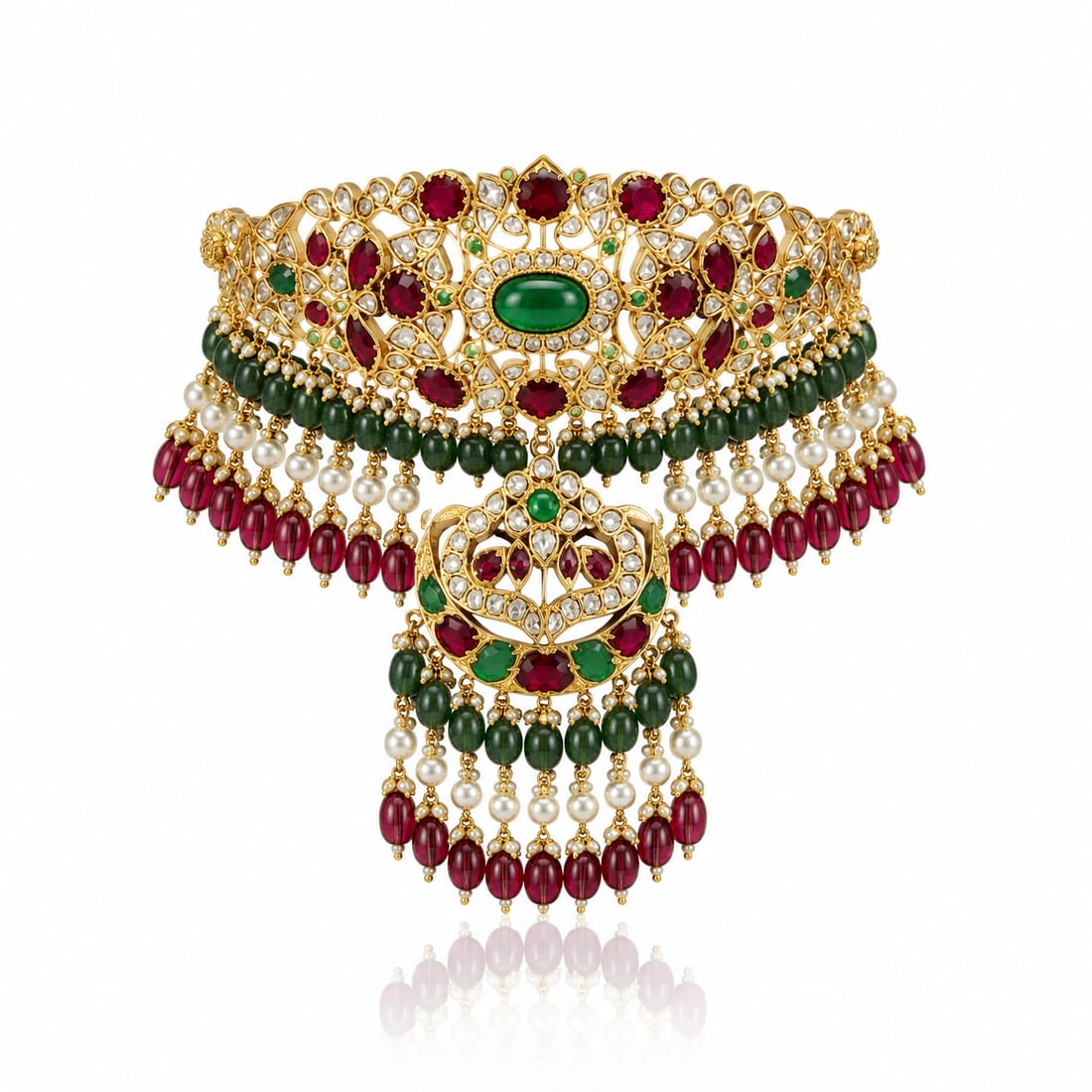
Rubies and emeralds share the surface of this choker in equal measure, finished in an oxidized gold tone with a beaded fringe hanging below. Splitting the design between two coloured stones rather than favouring one creates a busier, more layered look than a single-colour piece, which suits the choker's oxidized, antique styling. The beaded fringe is strung to move independently from the main body of the choker, adding motion to what's otherwise a dense, fixed pattern. Suited to bridal and festive wear where a fuller, more traditional colour palette is wanted.
Price on request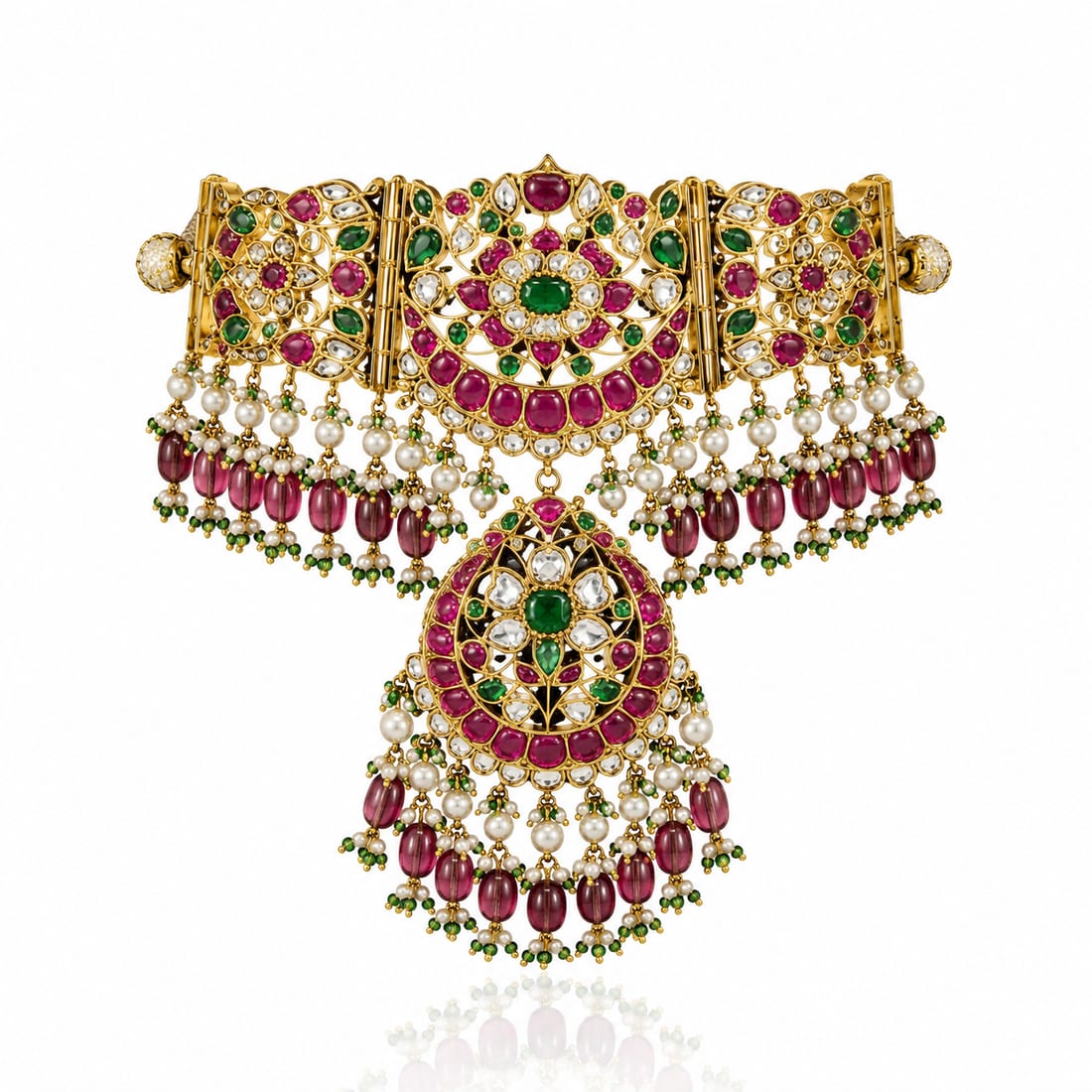
This kada is set with a mix of ruby and emerald cabochons over a base of uncut polki, giving it real visual weight on the wrist. Kadas are traditionally rigid rather than flexible, and this one keeps to that structure, meant to be worn as a statement piece rather than stacked with softer bangles. The ruby and emerald cabochons are placed asymmetrically rather than in a strict repeating pattern, which is typical of hand-set jadau work. A bold bridal and festive choice for anyone who wants their wrist jewellery to match the scale of a full polki neckline.
Price on request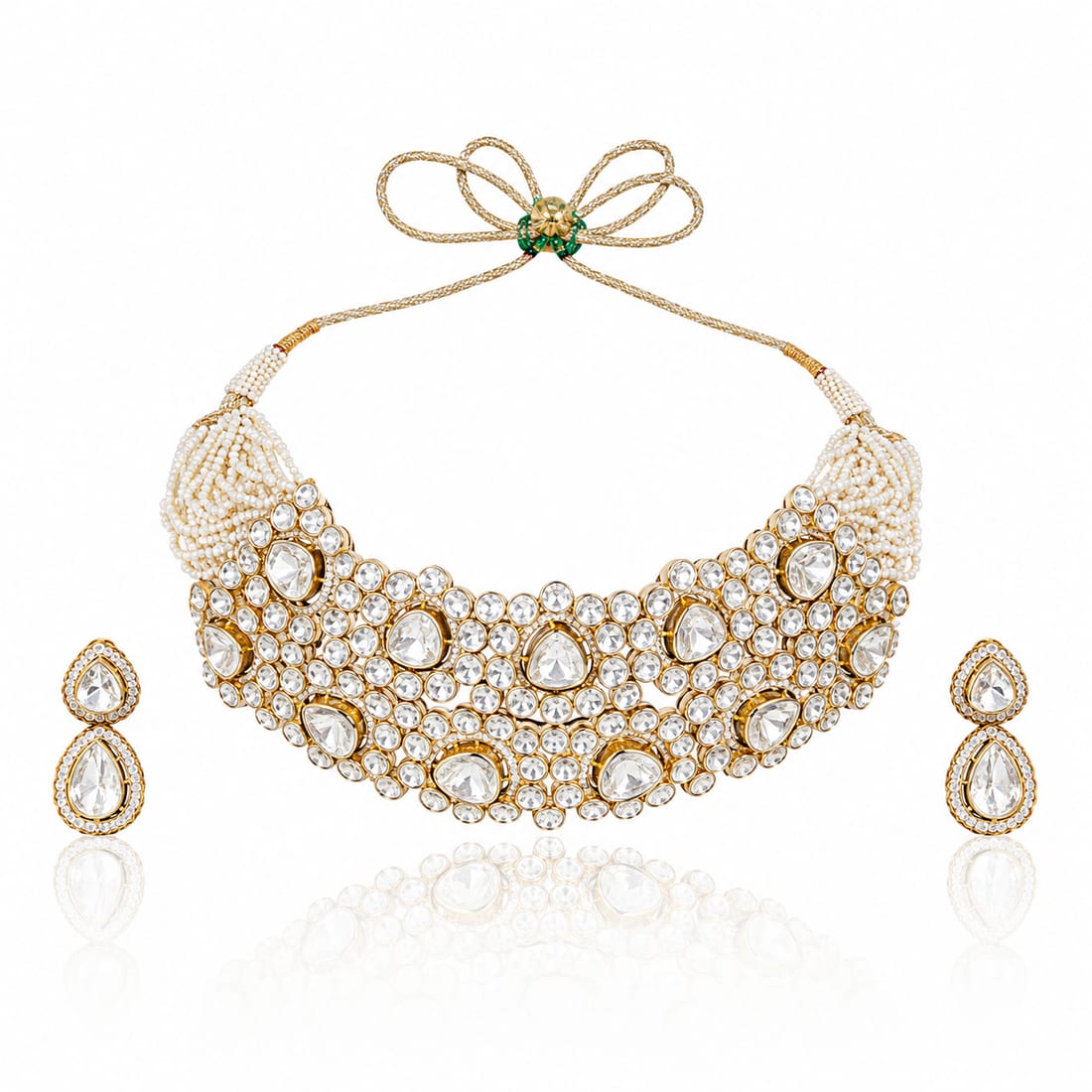
An all-white polki choker finished with a decorative bow clasp at the centre back, this set pairs with matching drop earrings. The bow clasp is a detail most people won't see while it's being worn, but it's finished with the same care as the visible front of the choker, which is typical of how these pieces are actually made. Keeping to white polki throughout gives it a cleaner, more versatile look than a piece mixing in coloured stones. Works for both bridal wear and reception functions, where a lighter, all-white choker is often preferred over a heavier coloured design.
Price on request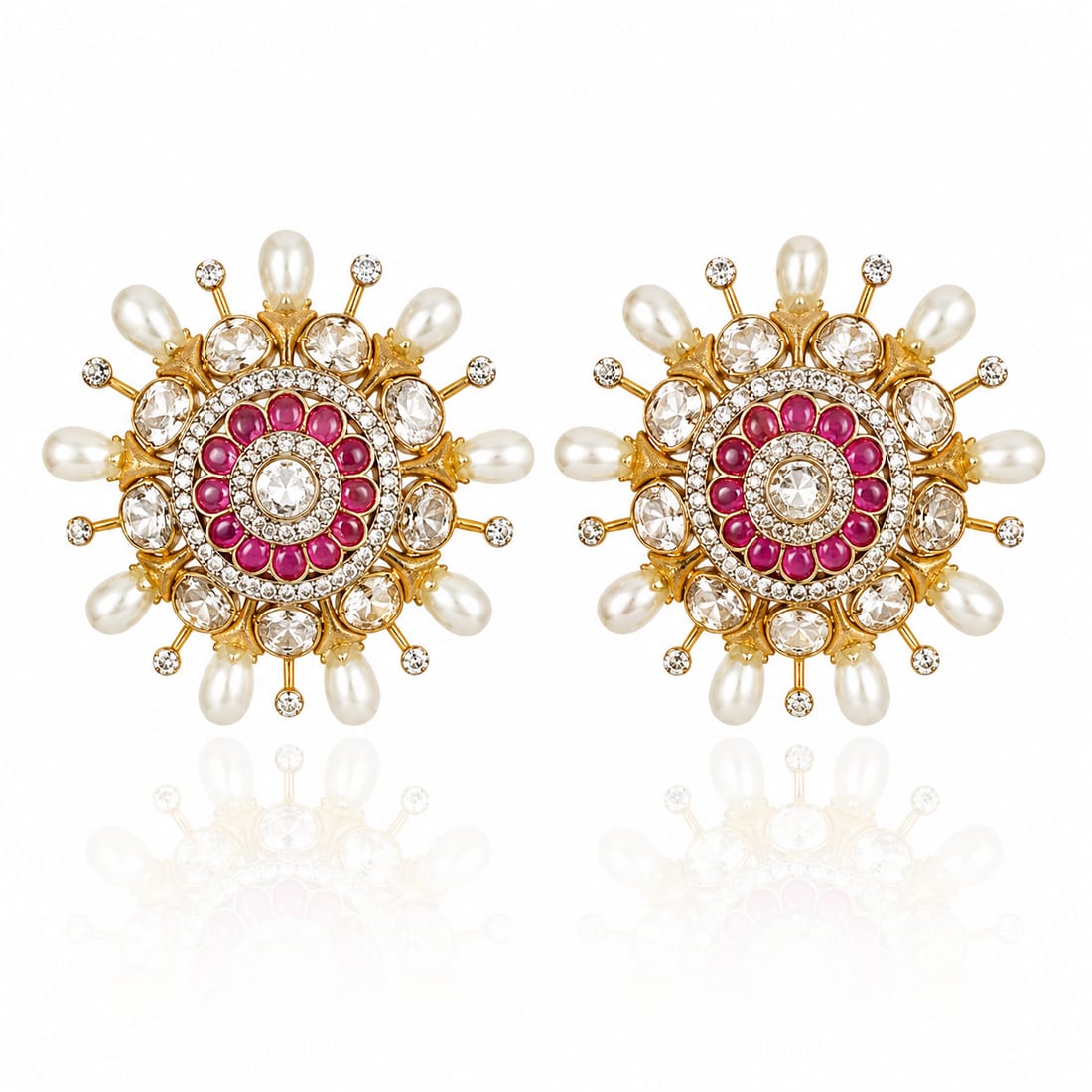
Pearls and diamonds radiate outward from a ruby centre in these earrings, arranged in a starburst pattern rather than a standard drop or stud shape. The radiating design means the earrings catch light from multiple directions at once rather than along a single line, giving them noticeably more sparkle for their size. Pavé-setting the rubies and diamonds keeps the surface dense, so very little metal shows between the stones. A festive and party-wear choice when you want a statement earring that doesn't require an equally elaborate necklace to balance it.
Price on request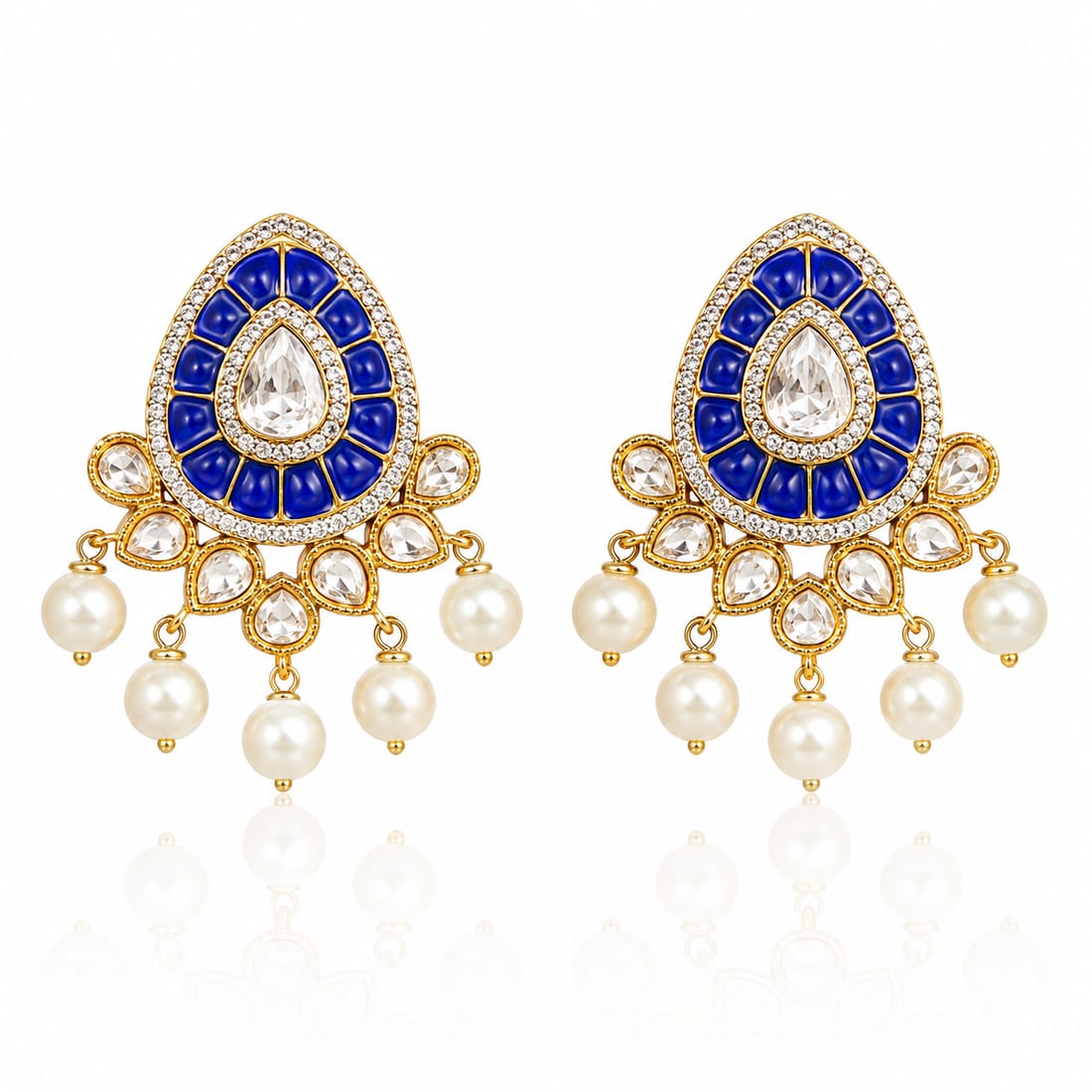
Blue meenakari enamel forms the base of these teardrop earrings, set with uncut polki diamonds and finished with pearl drops. Combining meenakari enamel work with polki setting on the same earring means two separate hand-craft techniques go into a single piece — the enamel fired first, then the polki set into the remaining gold framework. The blue provides a colour anchor that the white polki and pearls play off rather than compete with. A festive and wedding-wear pick for outfits already built around a blue or jewel-tone palette.
Price on request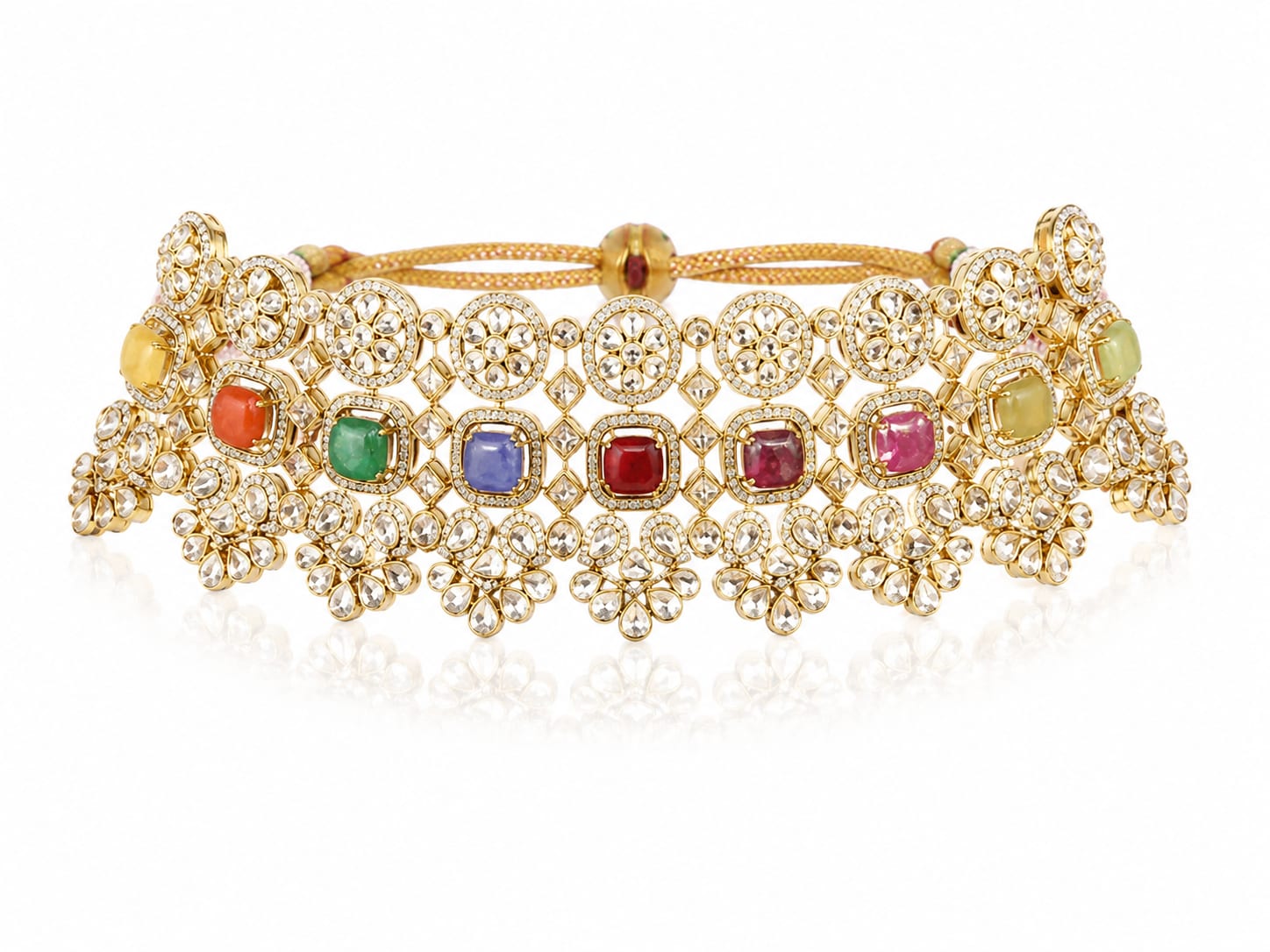
The nine navratna stones are worked into a floral lattice of uncut polki on this choker, rather than isolated as individual settings. Weaving the navratna stones into a continuous floral pattern, instead of placing them as separate accents, takes more planning at the design stage since each of the nine stones needs to sit within the lattice without disrupting its symmetry. The polki lattice itself provides the connective structure between each gemstone. A bridal and festive choker for those who want the traditional navratna symbolism presented in a more decorative, less segmented design.
Price on request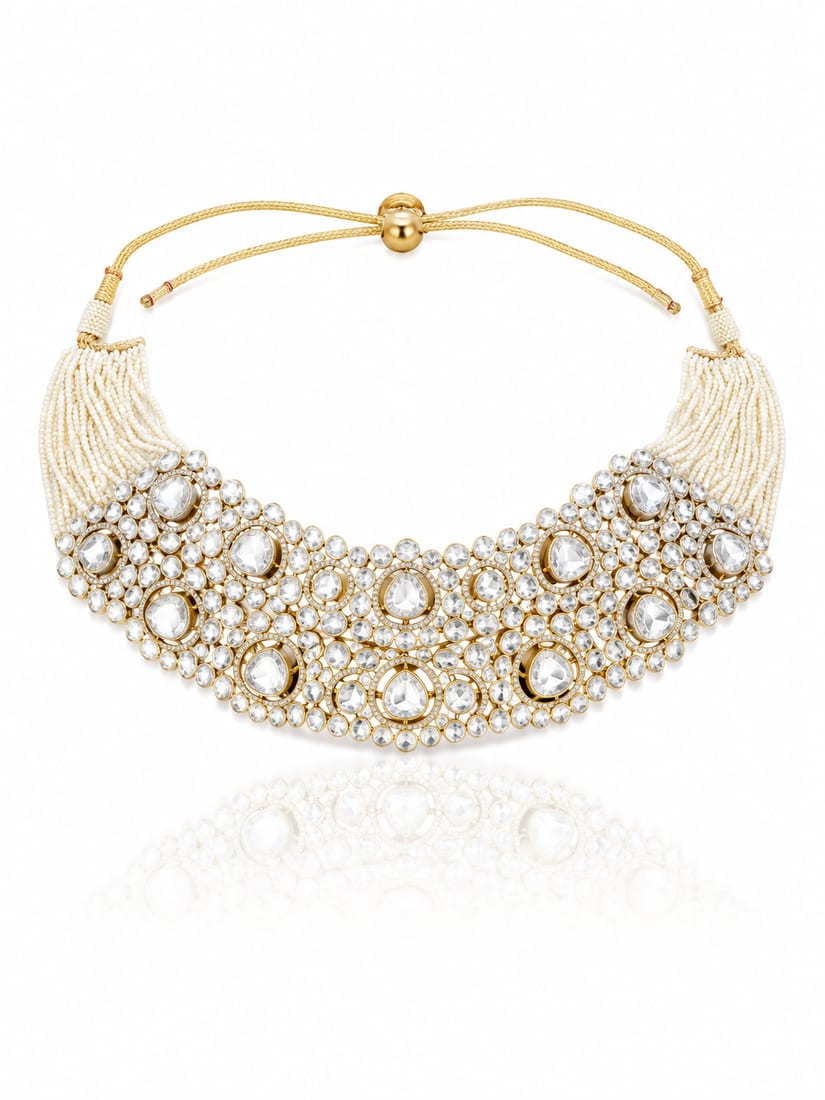
Multiple strands of pearl cord support this choker, leading up to a broad panel of hand-set white polki at the front. Using pearl cord instead of a solid metal band for the sides makes the choker considerably more adjustable and comfortable around the neck, since the cords can shift slightly rather than sitting rigid. The polki panel itself is left entirely white, letting the diamonds' natural glint carry the design without added colour. Built for bridal wear, where its combination of a substantial front panel and a lighter, adjustable back makes it easier to wear through a long wedding day.
Price on request