
The Collection
BIS hallmarked 22k gold jewellery — chokers, malas, bangles, kadas & rings, crafted on Lawrence Road, Amritsar.
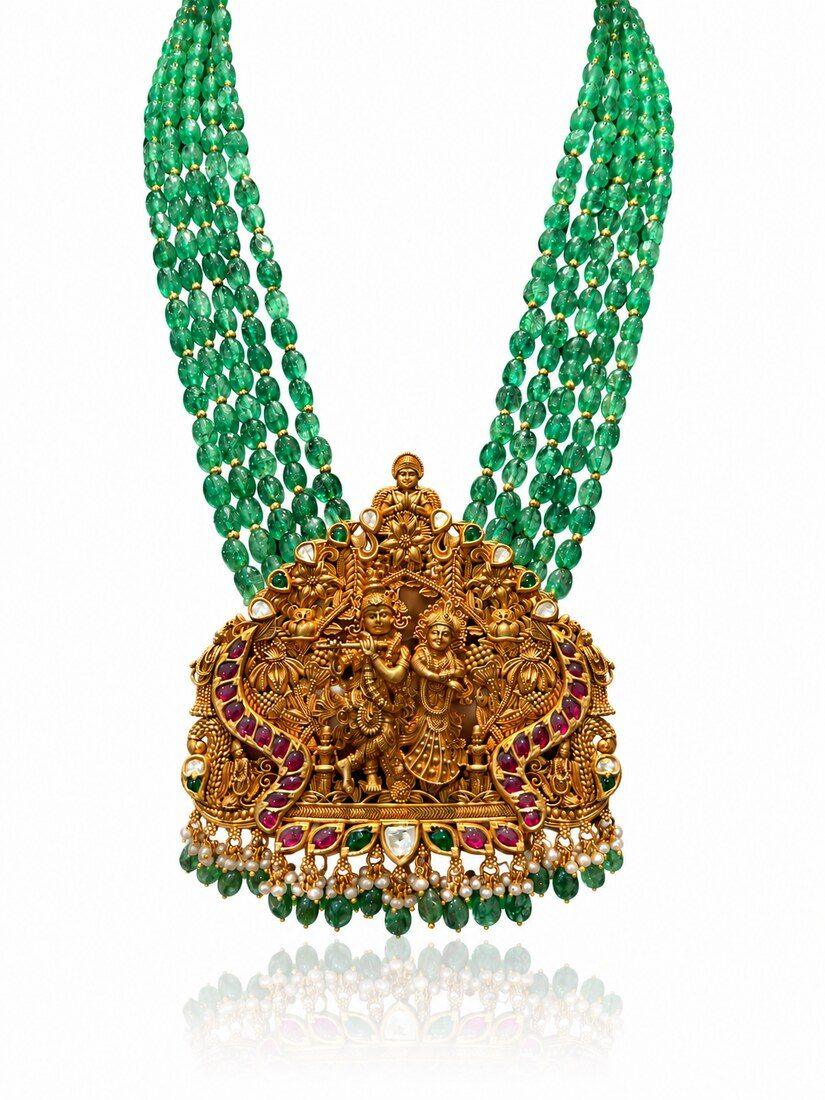
Multiple strands of emerald-green beads fall from the neck in this haram, gathered beneath a carved gold pendant finished in nakshi work. Nakshi refers to the fine relief carving on the pendant's surface, a technique that takes considerably longer than plain polished gold because every detail is worked by hand. The beads are hand-strung rather than machine-threaded, so the strand lengths sit naturally rather than uniformly. As a haram, it's designed to sit lower than a standard necklace, layering well over other jewellery. A natural fit for festive occasions and temple visits where traditional gold is expected.
Price on request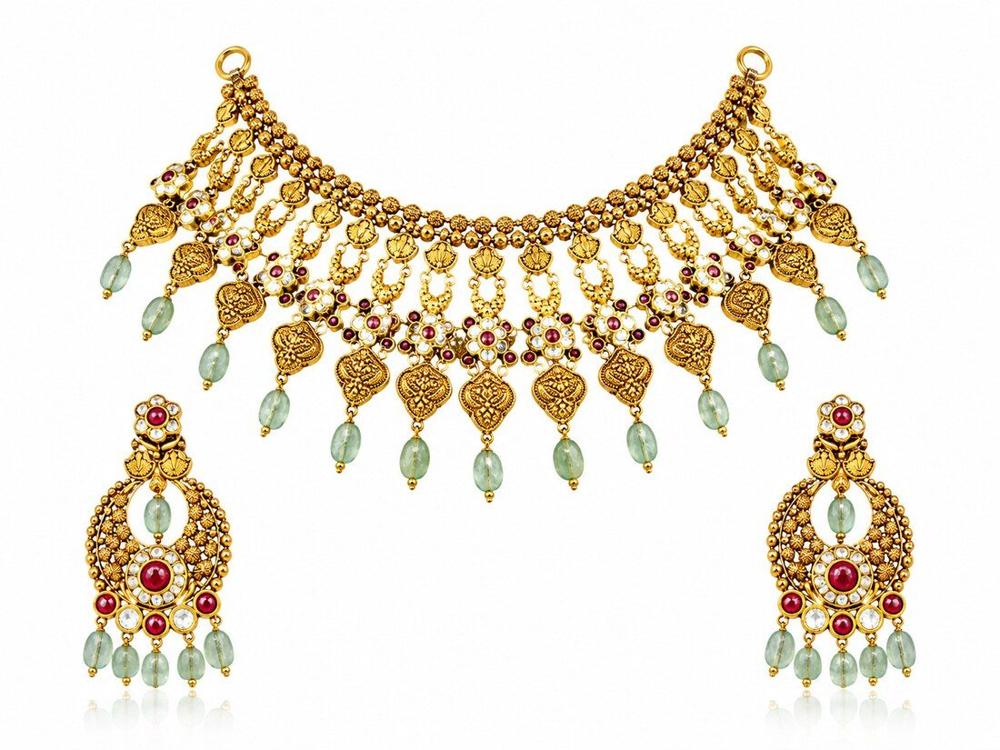
Tiny jhumkis — the classic dome-shaped bell earrings — hang in a fringe along the bottom edge of this gold choker, with small green highlights worked in between. Each jhumki in the fringe is hand-finished individually rather than cast as a single connected piece, so they move independently and catch light at slightly different times as you walk. The choker sits high on the neck, letting the jhumki fringe do most of the visual work below it. Traditionally worn for weddings and festive functions, where its movement and sound are as much a part of the design as its appearance.
Price on request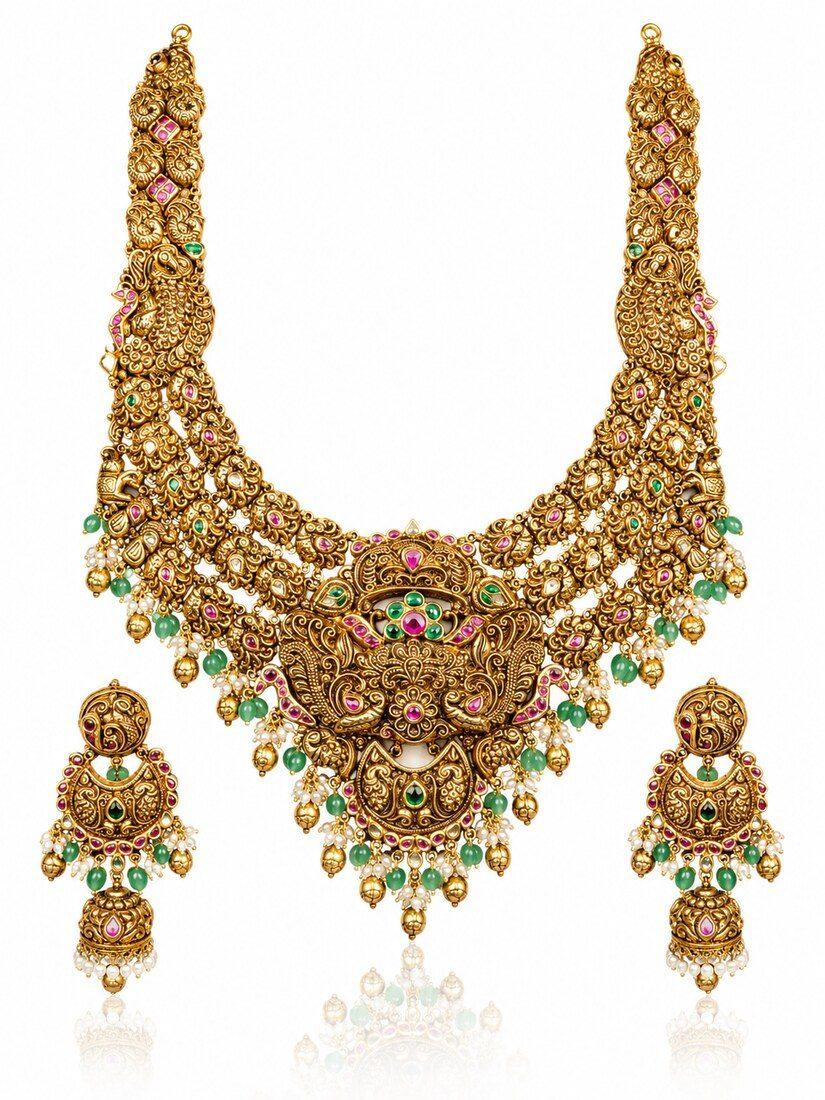
Layered in the antique style, this haram is worked entirely in deep, matte-finished gold rather than the high-polish look of more contemporary pieces. Antique finishing involves deliberately darkening the recesses of the carved pattern so the relief work reads more clearly, a nakshi technique passed down through generations of goldsmiths rather than something that can be replicated quickly. Multiple tiers give it real bridal scale, meant to be worn as a statement piece rather than paired with much else. Built specifically for bridal wear, where its weight and finish carry the formality the day calls for.
Price on request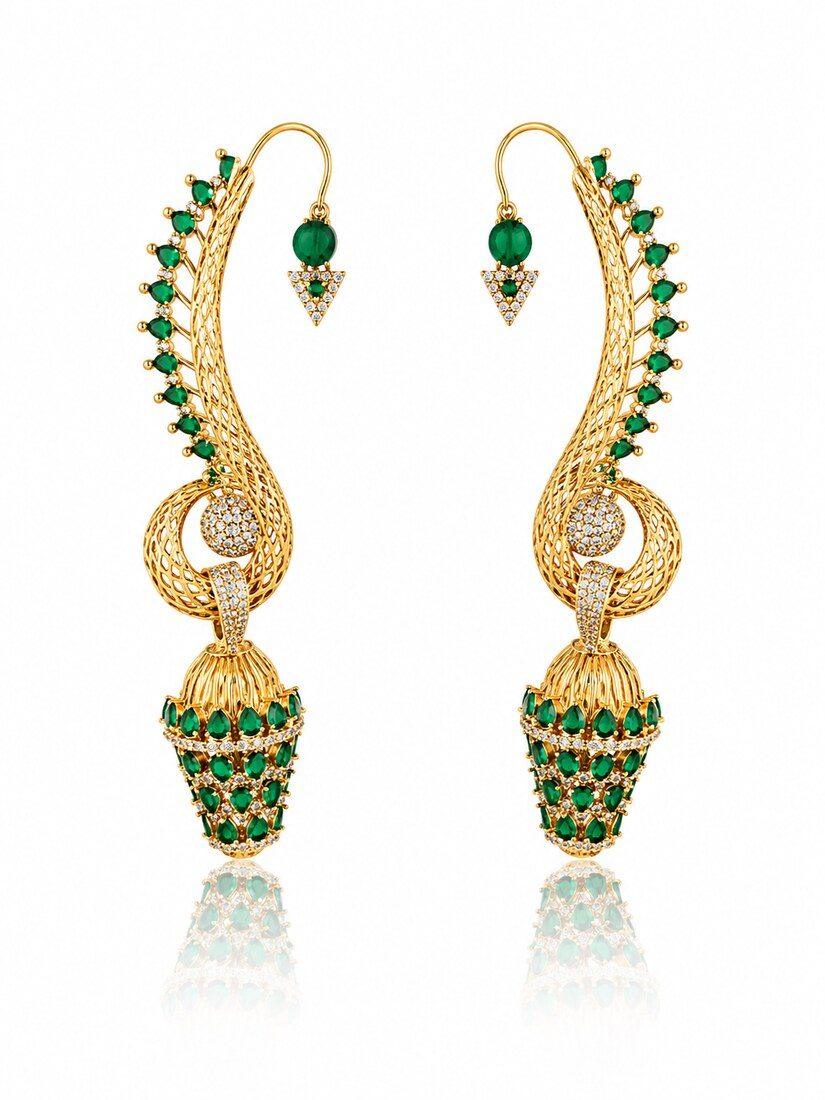
These danglers hook over the ear and drop into a classic jhumka bell shape, hand-carved with green stone accents worked into the gold surface. The hook style keeps the earring secure without a heavy back closure, which matters given the jhumka's weight sits mostly below the earlobe. Hand-carving means the surface pattern has slight variation from one earring to the other, rather than being identically stamped. A reliable festive-wear choice for anyone who wants the traditional jhumka silhouette without an elaborate matching necklace.
Price on request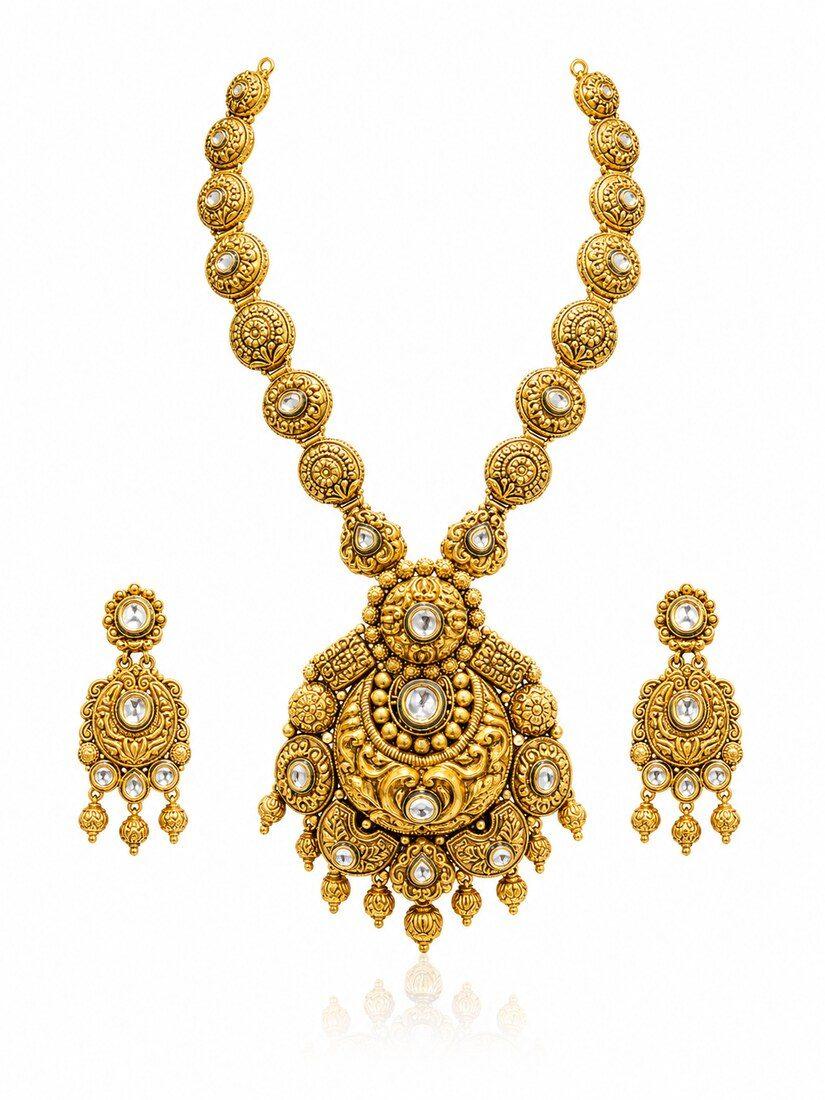
A simple gold chain carries a single floral pendant here, its petals hand-engraved rather than left plain. It's a quieter piece than most of the catalogue, built for daily wear rather than festive occasions, which is reflected in the lighter chain and smaller pendant scale. The engraving catches light subtly rather than throwing it, so the pendant reads as detailed up close without being showy from a distance. A good starting piece if you're building a gold collection from something wearable every day rather than saved for special occasions.
Price on request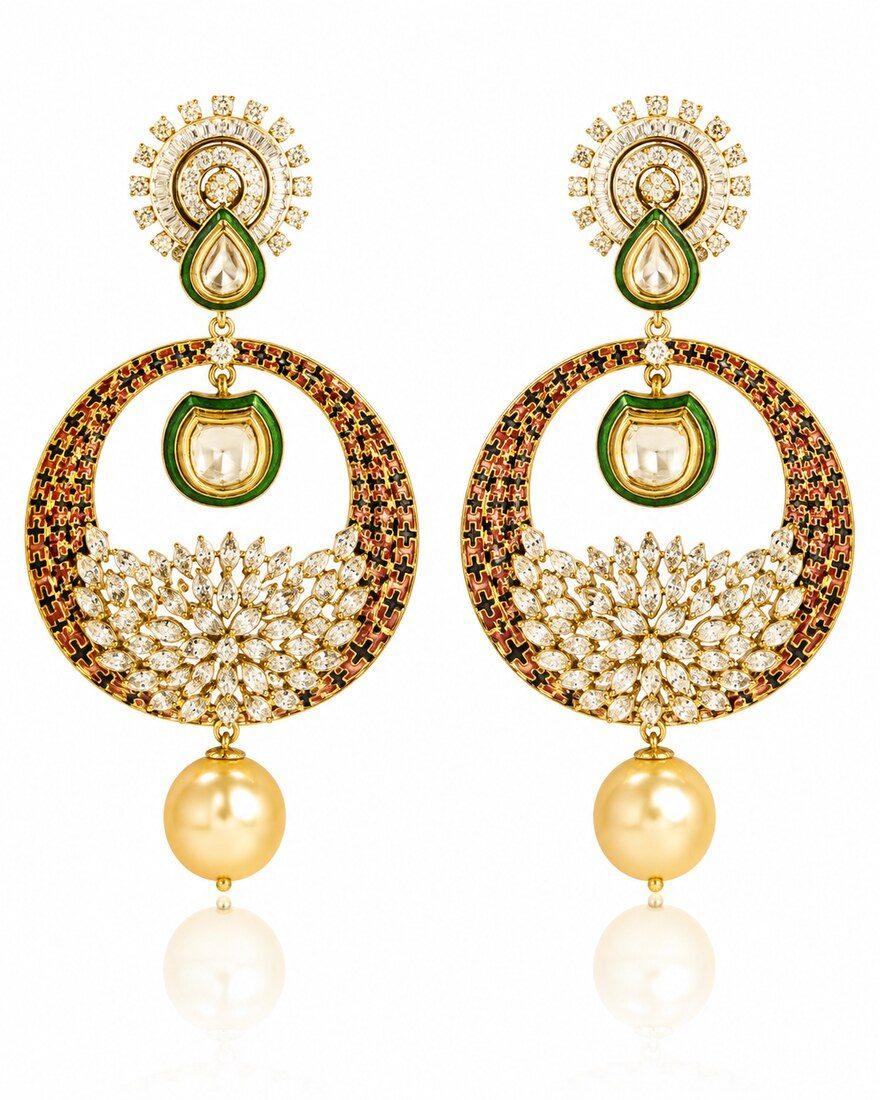
Shaped in the traditional crescent chandbali silhouette, these earrings are edged with small pearls and finished with pearl drops at the base. The chandbali shape — named for its resemblance to a crescent moon — has stayed a wedding and festive staple for generations, and this version keeps that traditional silhouette rather than a modernized reinterpretation. Pearls soften the look against the gold, giving it a slightly quieter finish than an all-stone chandbali. Suited to festive functions and weddings where traditional gold jewellery is the expected choice.
Price on request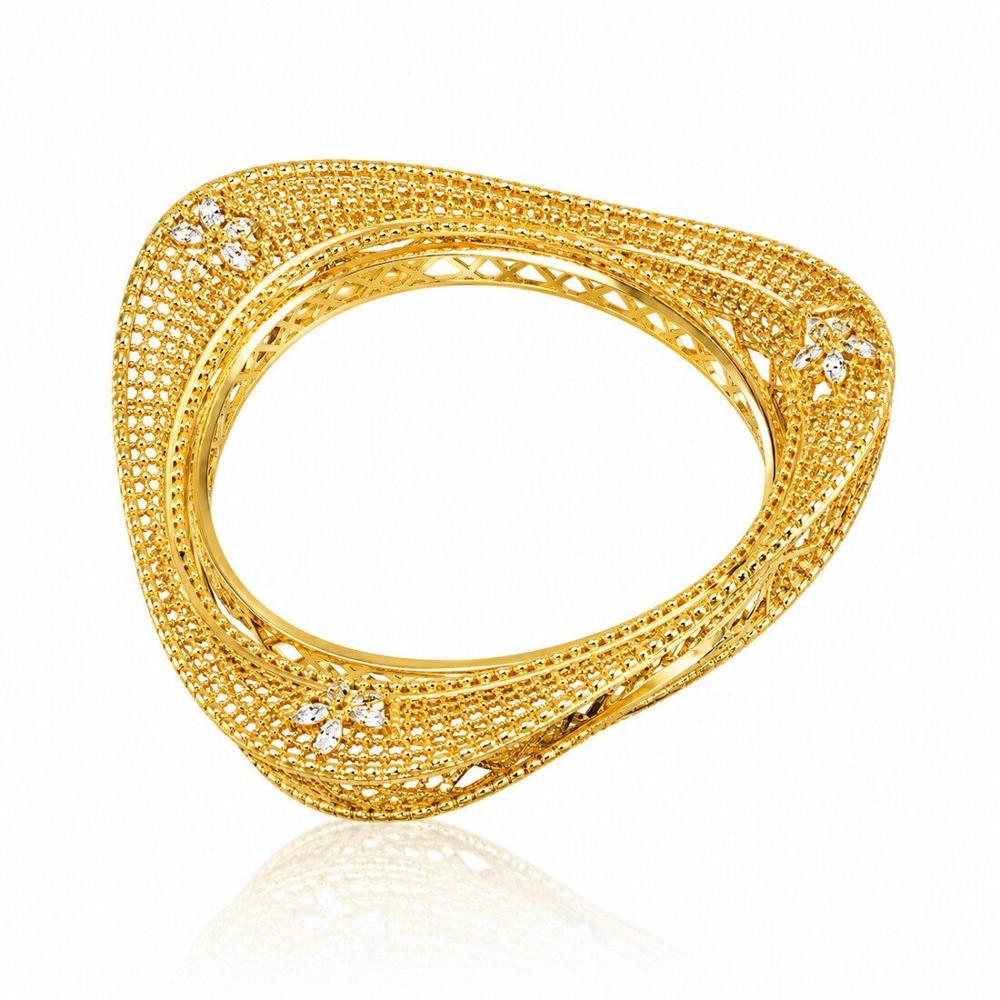
This kada is left deliberately textured, its satin finish catching light without the mirror shine of a polished bangle. Satin finishing is done by lightly abrading the gold surface, which also makes the kada more forgiving of everyday scratches than a high-polish piece would be. Bold and simple in shape, it's built for a man's wrist and works equally for daily wear and festive occasions without needing to be swapped out. The texture also means it pairs comfortably with other bangles without competing for shine.
Price on request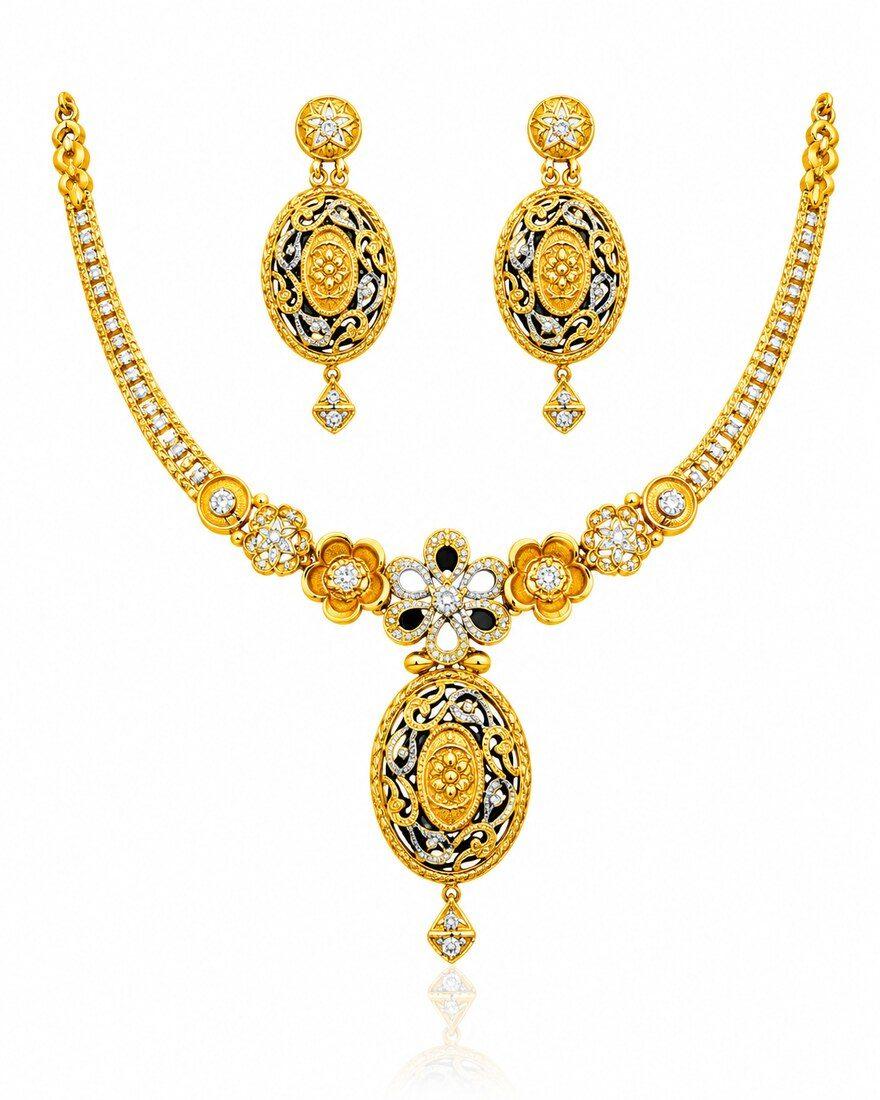
A graceful necklace with a single gold drop at its centre, paired with matching earrings, this set keeps to a classic, high-polish finish without added stonework. Its simplicity is deliberate — this is the kind of set that's often chosen as a gift precisely because it doesn't compete with an outfit or occasion the way a more elaborate piece might. The drop pendant gives it just enough presence to feel finished rather than plain. Equally suited to daily wear or as a first-gold gift for a milestone occasion.
Price on request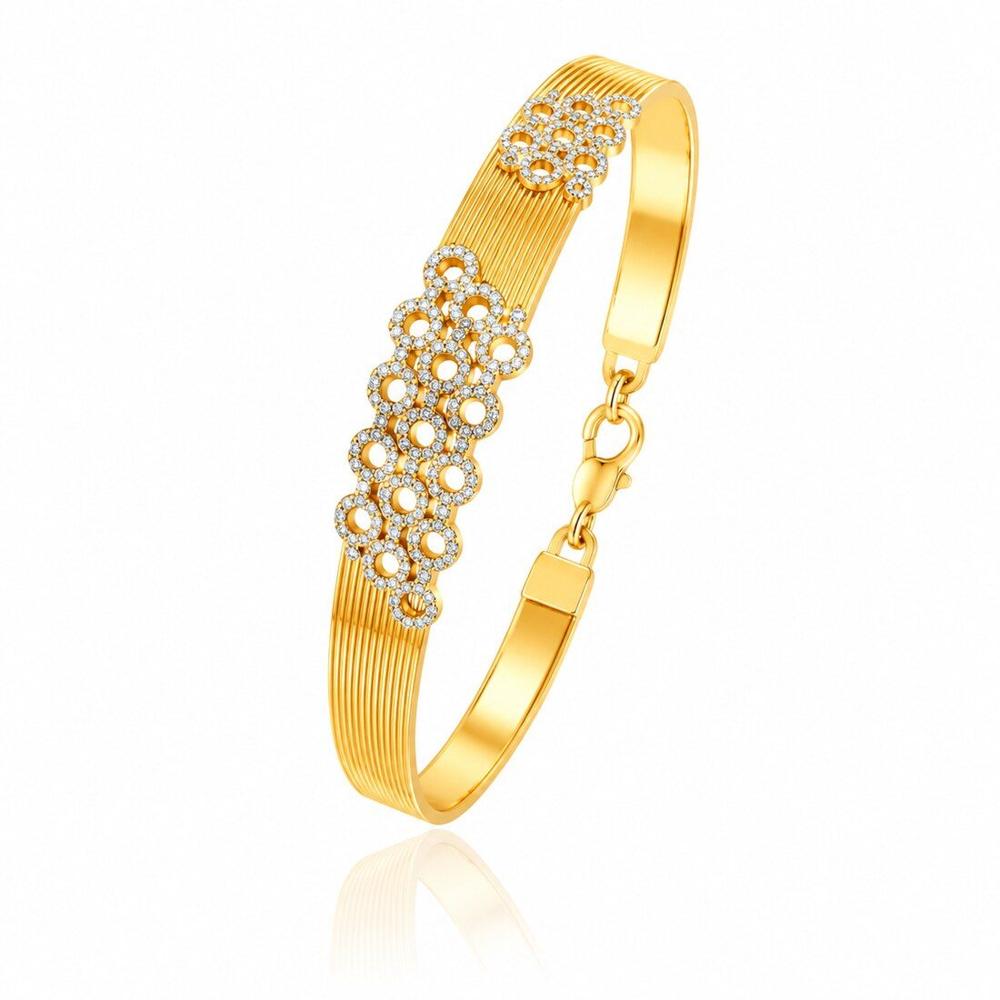
A slim gold bracelet brightened with a scattering of bezel-set diamonds, this piece is built for daily wear rather than special occasions. Bezel setting surrounds each diamond in a thin rim of metal rather than exposed prongs, which protects the stone from daily knocks and makes the bracelet more practical to wear without much thought. The diamonds are spaced rather than clustered, so the gold itself still reads as the main material. A comfortable, low-maintenance piece for anyone who wants a little sparkle without a statement bracelet's upkeep.
Price on request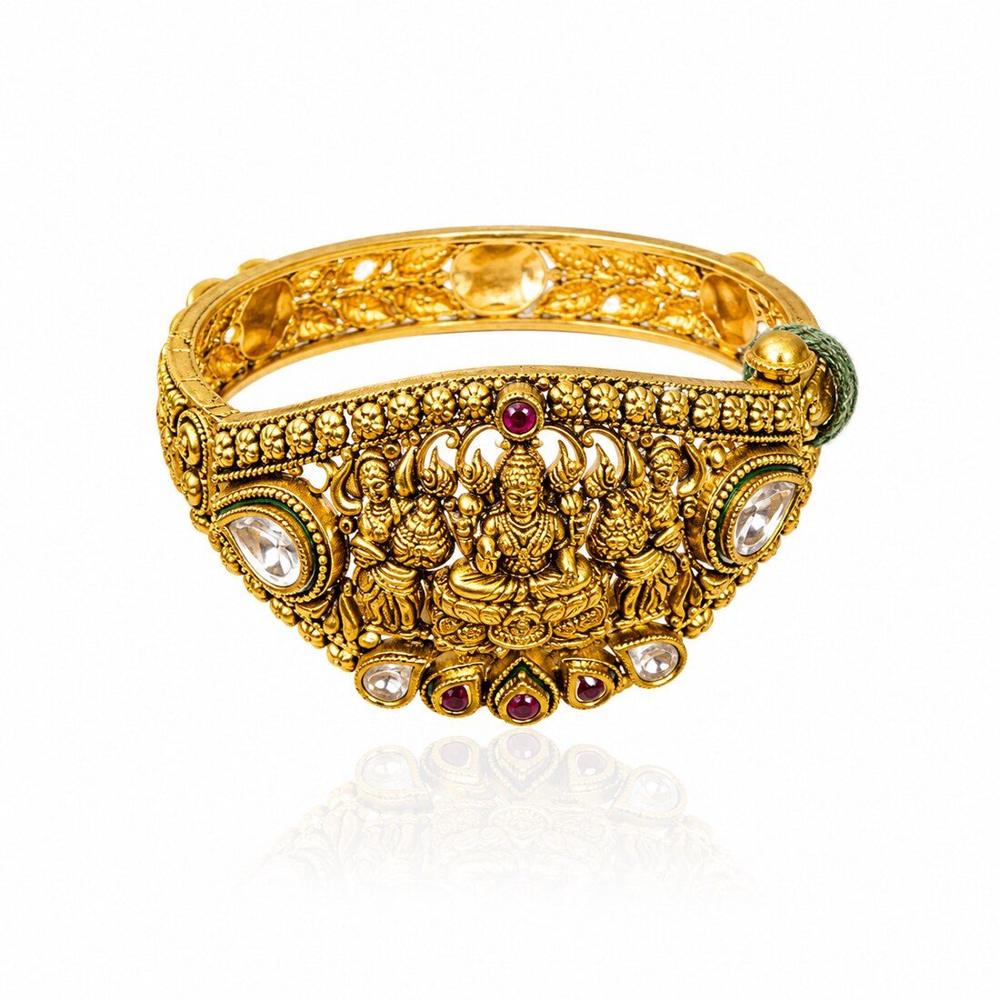
Openwork carving runs the full width of this broad bangle, the gold cut through in a flowing pattern rather than left as a solid band. Openwork takes longer to execute than solid carving since the goldsmith is removing material rather than just marking its surface, and the result is a bangle that's lighter on the wrist than its width would suggest. The pierced pattern also lets the bangle move and catch light differently than a solid surface would. A festive-wear piece with enough presence to wear on its own.
Price on request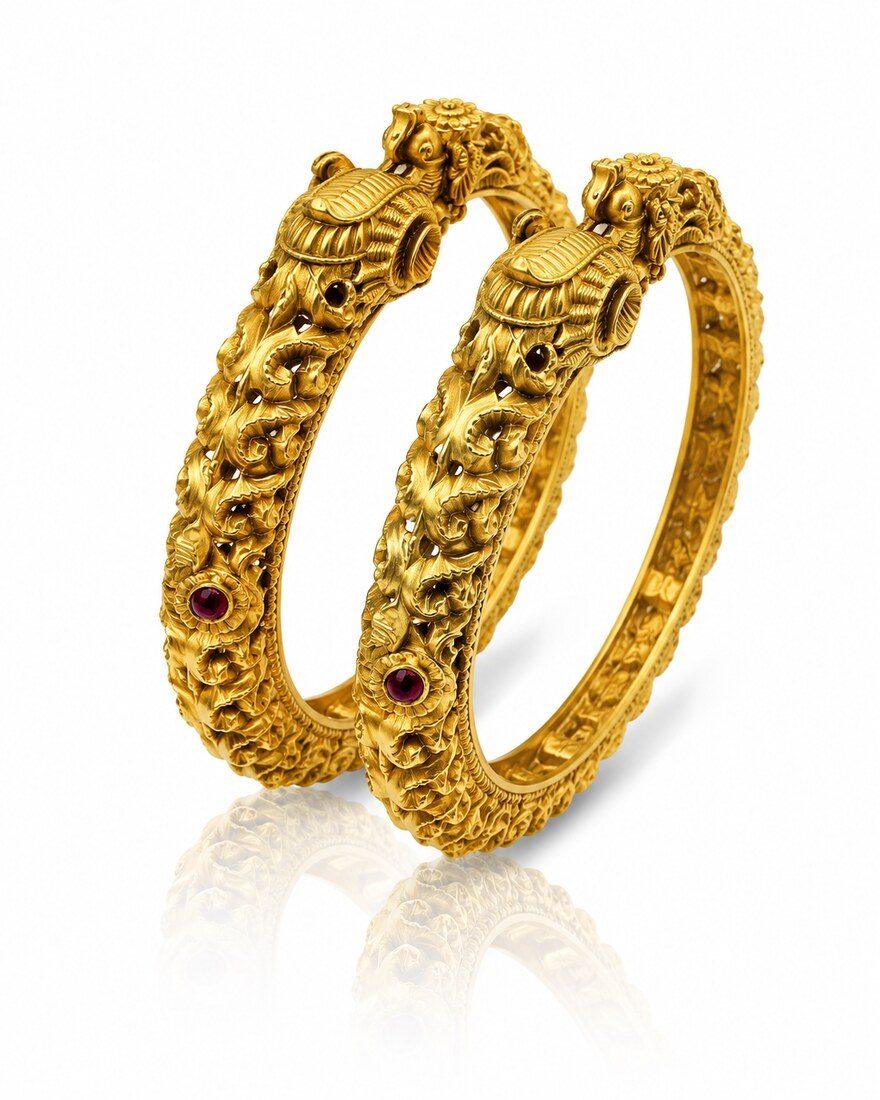
This pair of kadas is carved in deep, heritage-style patterns and finished with the darkened antique look that lets the relief carving stand out clearly. Worked as a pair rather than a single kada, they're designed to be worn together on the same or opposite wrists, which is traditional for wedding and festive dress. The antique hand-carving technique is slower than plain casting, since the darkening process has to be done carefully around each carved detail without muddying the pattern. Built with real wedding-day weight and presence in mind.
Price on request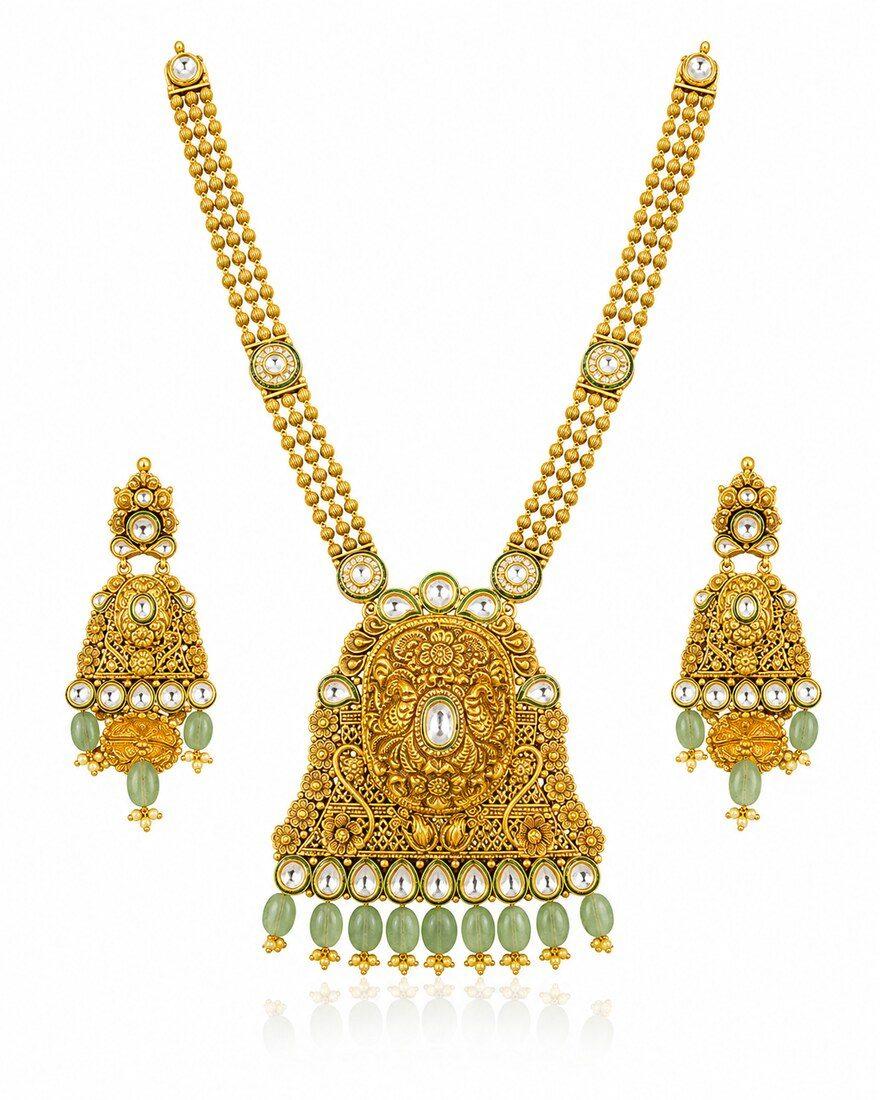
This haram pairs a temple-style pendant with a matching set of jhumka earrings, all worked in the temple jewellery tradition associated with South Indian goldsmithing. Temple craftsmanship typically favours dense, figural motifs over open filigree, and that density is what gives the haram its substantial, formal look. Worn lower than a standard necklace, it layers naturally with a choker underneath for a fuller bridal neckline. Suited equally to bridal wear and temple visits, where this style of gold jewellery carries specific traditional significance.
Price on request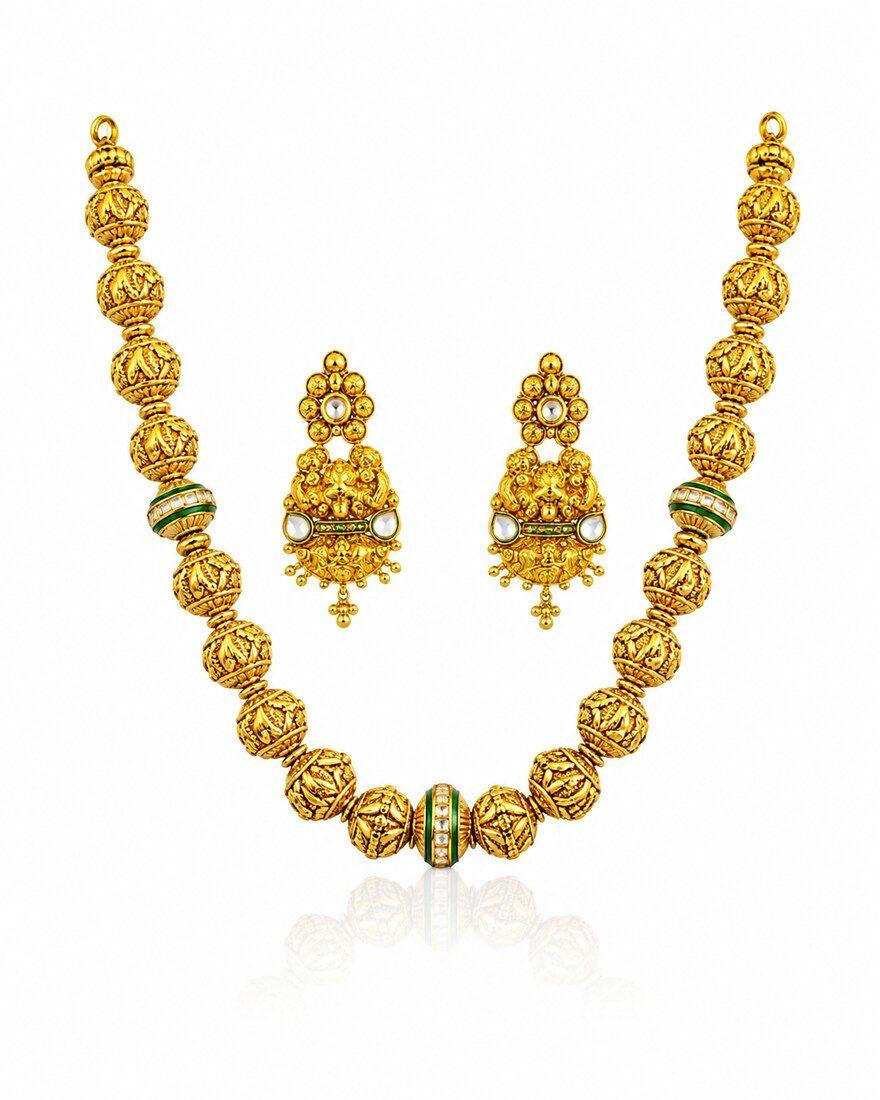
Hand-strung gold beads make up this necklace, paired with delicate matching earrings that echo the same bead shape at a smaller scale. Hand-stringing means the beads sit with tiny natural gaps rather than machine-uniform spacing, which gives the strand a slightly more relaxed drape around the neck. It's a versatile set — plain enough for daily wear, but with enough gold weight to hold its own at festive gatherings too. A practical choice if you want one set that can move between an ordinary day and a family function without feeling out of place.
Price on request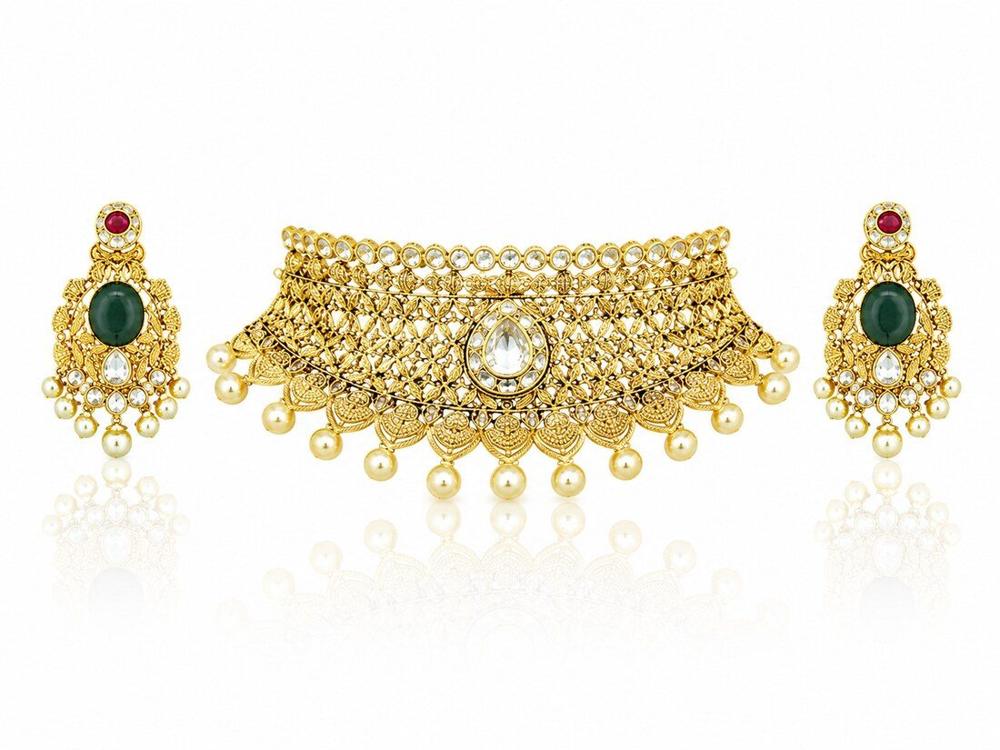
This gold choker set brings together rubies and emeralds in a traditional stone-set pattern, the two colours alternating rather than segregated into separate sections. Mixing red and green stones in gold is a long-standing combination in Indian bridal jewellery, valued as much for the colour contrast as for the individual stones themselves. The choker sits close to the neck, with the set rounded out by earrings finished in the same stone pairing. Designed for weddings and festive occasions where this classic colour combination is exactly what's expected.
Price on request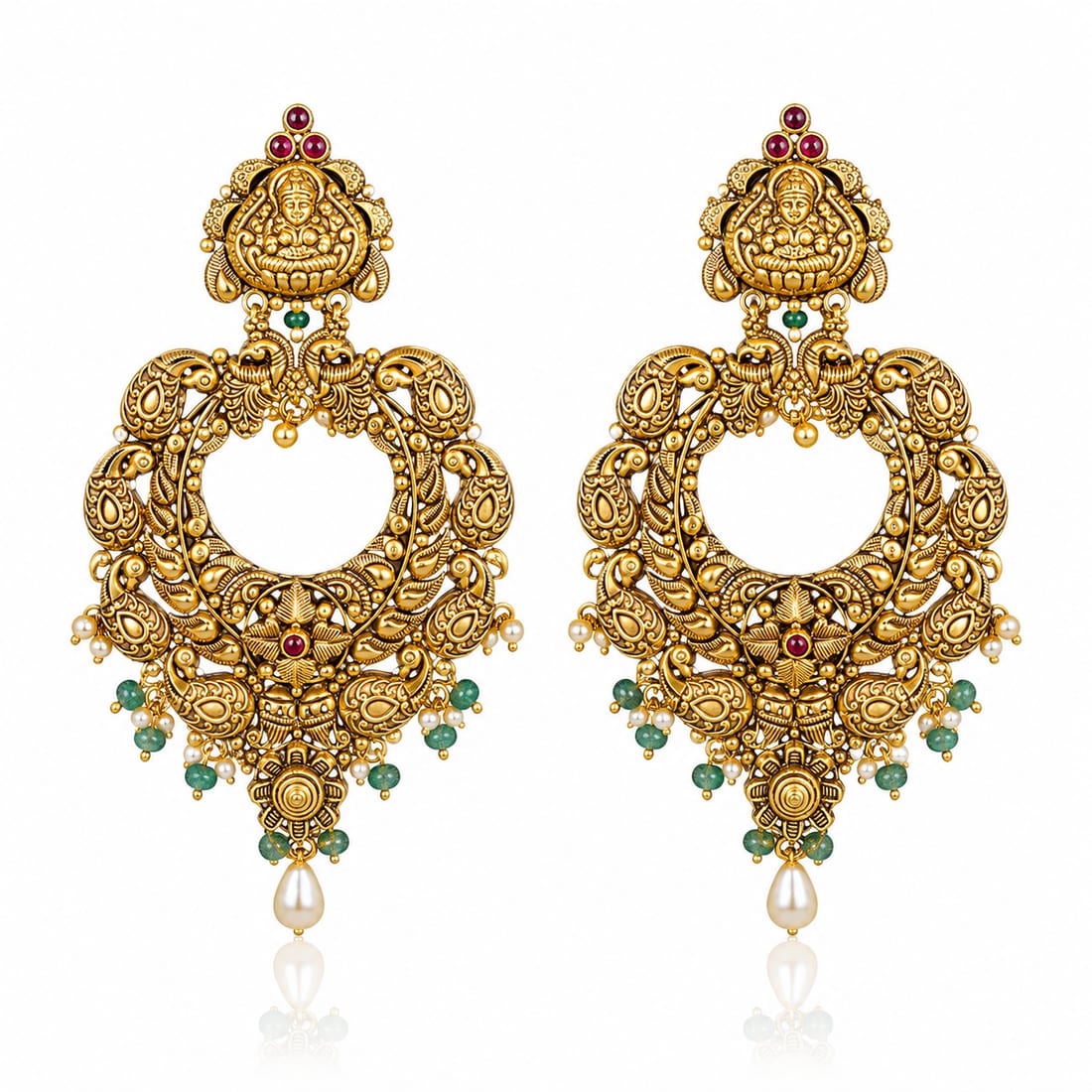
A Lakshmi motif is carved into the top of these temple-style jhumkas, with small ruby and emerald accents worked in around the figure. Depicting Lakshmi, the goddess associated with prosperity, is a long-standing choice for temple jewellery, and the antique gold finish here is meant to echo older, hand-crafted pieces rather than a bright contemporary polish. The jhumka bell hangs below the figural top, giving the earring its traditional dome shape and gentle movement. A wedding and temple-wear piece for anyone who wants figural, symbolic detail rather than a purely geometric design.
Price on request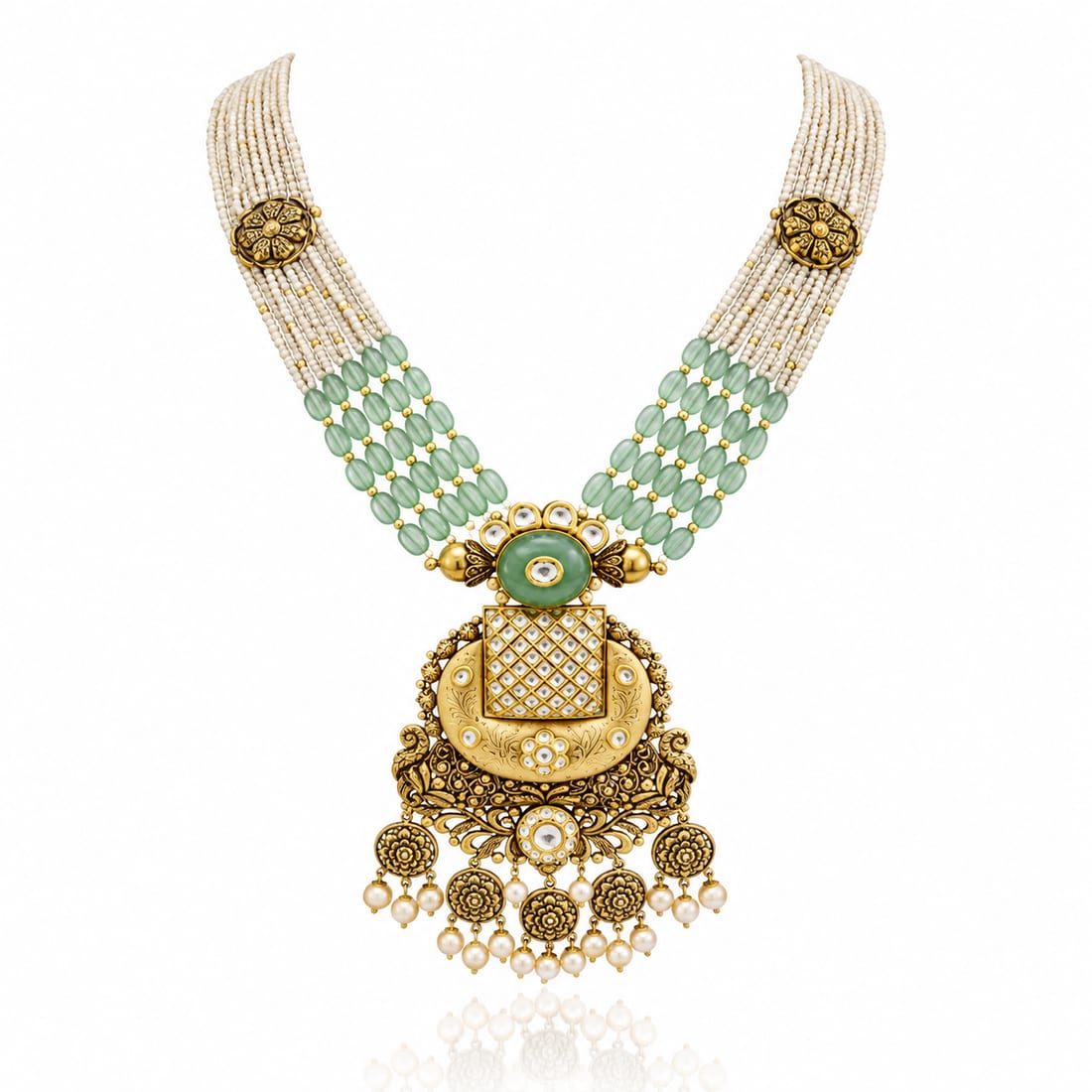
Several strands of green beads layer beneath a single carved gold pendant in this necklace, the beads left slightly uneven in size rather than perfectly matched. That natural variation is typical of hand-strung beadwork, where beads are sorted by eye rather than machine-sorted to an exact diameter. The pendant itself carries nakshi relief carving, giving it more detail than a plain drop would have. Layered but still fairly light to wear, it suits festive occasions as easily as it does a regular day when you want a bit more gold on than usual.
Price on request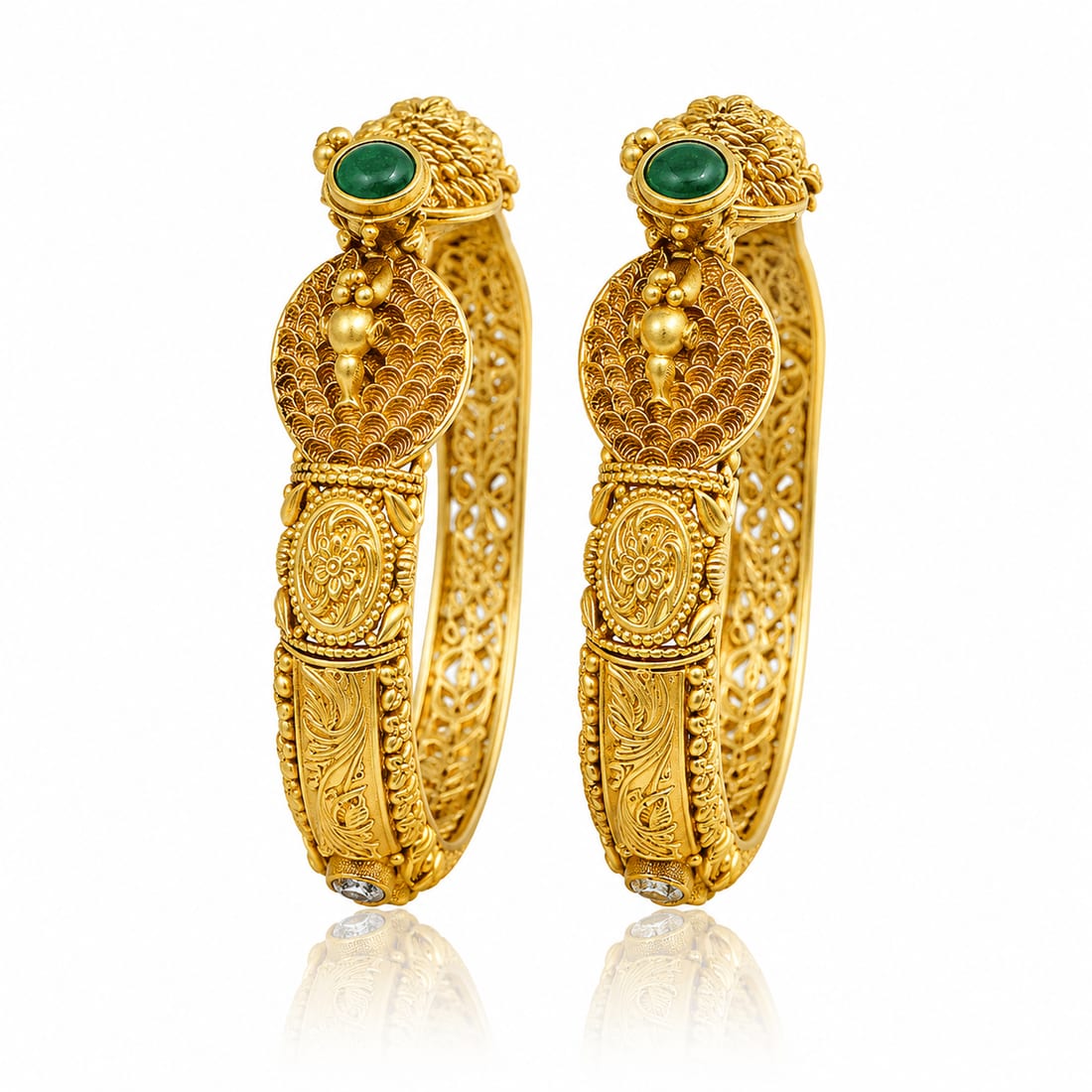
This pair of antique-finish kadas is set with a single emerald cabochon each, the rest of the surface worked in dense hand-carved detail. Keeping to one stone per kada rather than a fully stone-set surface puts the focus on the carving itself, which covers the band in traditional motifs rather than leaving plain sections of gold. Worn as a pair, they're designed to sit together on one wrist or split across both. The antique finish darkens the recesses of the carving so the pattern reads clearly even from a short distance. A wedding and festive choice for those who want carved gold detail over a fully stone-set look.
Price on request